PhD to Business Part 2 by Bailey Lang
 Let’s welcome back Bailey Lang as they share with us “PhD to Business Part 2.” Enjoy!
***
Leaving higher ED to start a business is not a choice that is talked about often in academic spaces.
When I decided not to pursue a faculty role after completing my PhD, I had no clear roadmap to starting (much less running) a sustainable solo business.
At the time, I didn’t know many other people who had made a similar choice.
That has changed in the years since!
I’m now connected with so many PhDs who run businesses that I’m no longer surprised to find other people who have followed a similar path.
I interviewed many of those people for this article and met a few more along the way.
Building a solo business is a challenge no matter what your starting point is — but the challenges are balanced by the benefits.
That’s what I wanted to focus on in the second part of this series to wrap things up.
I often describe running a solo business as being in a constant dance.
Nothing is ever static or stable for long!
But being the Literary Witch is also a joy.
There are things I wish I’d known before I set off on this path — many of them are reflected in my interviewees’ responses in this article — and amazing experiences I’d never have had if I hadn’t been brave enough to take the first step.
Before we get into these conversations, here’s a quick reintroduction to the people featured in these articles.
- Taylor Allbright, Allbright Coaching.
Taylor has a PhD in education policy.
Her dissertation was on the implementation of racial justice-intended initiatives at the school and district level.
Taylor is now an ADHD coach.
- Kate Henry, Productivity Coach.
Kate has a PhD in rhetoric and writing studies.
Her dissertation was on the woman who wrote the first lesbian magazine in the U.S. Kate is now a productivity coach.
- Amelia Hruby, Off the Grid.
Amelia has a PhD in philosophy.
Her dissertation was on feminist aesthetics.
Amelia is the creator of Off The Grid.
- Jessica Kirk, Aspen Gold Consulting.
Jessica has a PhD in management and entrepreneurship.
Her dissertation and research focused on management, gender, sexual harassment, and diversity.
- Jenn McClearen, Publish Not Perish.
Jenn has a PhD in media studies.
Her dissertation was about women in the UFC.
Jenn is now an academic writing coach and developmental editor.
- Katy Peplin, Thrive PhD.
Katy has a PhD in film, television, and media studies.
Her dissertation was about the history of animals on screen.
Katy is now a coach and community facilitator for anyone who wants to be a scholar without sacrificing their humanity.
What’s something you wish you’d known when you started your business?
Taylor Allbright
I talked to someone who had left academia to start a business, and she said it takes a lot longer than you think to recover from academia, for your identity to change, and to get your business going.
The thing that was particularly challenging, and still is challenging sometimes, is the change of identity.
It happened at the same time I was transitioning into motherhood.
There were just a lot of big identity changes that felt very dramatic.
I did not expect as I was approaching midlife for my entire identity to shift, but up until that point, I had really defined who I was by what I did.
My job or the school program that I was in was very core to who I was.
Even though I enjoy ADHD coaching, it doesn’t feel like who I am the way being a professor felt like who I was.
I feel like I’m a person who happens to do ADHD coaching, like I also go to yoga.
It’s a thing I do, but it’s not a thing that I am.
That was very hard for me because it felt like there was a big hole for a while in terms of how I defined myself.
Kate Henry
Something different now is that I delegate things to people to help me.
I certainly make more money now than I did when I first started.
It wasn’t until two years into my business that I was able to have it be my full-time job.
When I first started my business, I was like, “I need to learn everything about business. I need to DIY everything.”
If I could tell myself something when I was starting the business, I would be like, “This is actually going to be a profitable, good thing. Just keep working on it. Don’t worry.”
I’m very grateful to be in a space where I can hire folks to do web design.
I have an assistant who helps me with stuff.
Whereas that was just not accessible in the early stages of my business.
Amelia Hruby
That self-employment is exciting but not easy!
And success takes so much longer than viral posts and online coaches might tell you.
Jessica Kirk
You are not going to have all the answers right away, and it’s going to shift and change and evolve.
When I did start out, I was like, “I’m going to do a feasibility analysis.”
Feasibility analysis works great when you have a specific product or a specific plan.
Early on, it’s so much searching.
It is the entrepreneurial method of starting with what you know and what you have, and doing a little bit, and talking to people and gaining a little bit of data, but it’s messy.
It’s not linear.
I think I did have this sense of, like, I’m a researcher, and I know this stuff.
I can go in, and I can get an answer: is this feasible or not?
And that’s just not true.
It’s going to take longer than you think.
That’s something that was told to me by a number of people in the beginning, and I would reiterate that. It takes a while.
Don’t underestimate the skills you have as an academic.
Sometimes, I forget that, oh wait, I have a PhD.
I often underutilize it in my messaging and when I’m talking to people.
Some people heavily lean on it.
It’s at the forefront.
I don’t know if that’s right or wrong.
That’s just not what I have been doing.
If I’m talking to the leader of an organization, maybe I haven’t been in their shoes for a long time.
But I’m bringing us something very different.
It’s just easy sometimes to forget, particularly if you’ve been in academia and you’re around a bunch of other PhDs all the time; you forget that not everyone has a PhD.
Jenn McClearen
When I was in academia, it became so singularly focused.
When I was in grad school, it was like, “Get the academic job.”
I set up my entire career pursuing that.
I wish I had known that I did not have to approach it with the same degree of single-minded pursuit.
I was constantly consumed by building the business and was I doing it right, and should I do it this way and should I do it that way?
I’ve gotten to this point where it doesn’t have to be so hard.
I don’t have to be hustling.
I would have told myself to be a little bit gentler because I was burned out from academia.
Just take it easy a little bit more.
I wish I’d known that.
I think it’s important to mention that in building my business, I had a partner who had a good, stable job.
Not everybody who becomes an academic entrepreneur has that, and so there’s a degree of hustle that you may have to do because you’re really literally trying to make ends meet.
I acknowledge that privilege because I think it does have an impact on where I am now and what I’ve been able to do, but I also think that that was true before when I was an academic.
In entrepreneurship, freelancing, and independent work, you’re responsible.
You’re bearing the risk; you have to provide your own health insurance, and you have to take on your own retirement plans.
It’s all on you, not on some company or university.
There’s a myth that there’s this unbridled freedom that is accessible for everyone in the same way, and it’s not always true.
It’s not easy for a lot of folks.
Part of the reason I chose this was to have that freedom, and I do have it to a degree, partially because of the privileges that I’ve already talked about.
Partially for some other things like luck and right place at the right time, the right sequence of events.
I hear some people that are like, “If you too want all the freedom and to live where you want and do what you want, then here’s this easy path forward.”
I don’t want anyone to think that it’s easy because a lot of factors have to line up.
There’s a lot of self-drivenness and self-starting that you need to have as an entrepreneur.
If those are not qualities that you find a strength in yourself, then it is something that you have to be prepared to develop.
I don’t think entrepreneurship is necessarily the path that everyone can take if you’re seeking an exit out of academia.
People look at me, and they’re like, “You moved to Europe and started your own business, and isn’t that great and wonderful?”
And yes, it is, but it’s more complicated than that.
Talking to people and getting realistic about the pros and the cons is important.
Katy Peplin
Self-employment is a way to deeply know yourself, and to deeply know how you understand yourself inside of different systems.
Seemingly benign tasks like “create marketing materials” can and will invite you into deep, if not existential, thoughts about what your beliefs and values are.
You can always, of course, adopt someone else’s framework and follow it wholesale to avoid some of these questions, but ultimately, it’s up to you to decide what you want your business to look like, and how you want it to behave in the world, and how you want to live within it, as well.
It can feel like that work is beside the point (and there are plenty of voices to encourage you to just post on Instagram!! make the TikTok! get your work out there!!), but I have only benefited — personally and professionally — from getting clear about what I believe, and what I stand for as a business owner and person.
What has been the best thing about running a creative business?
Taylor Allbright
The freedom, the autonomy.
I have the ability to design my life around what I need and what I want in a way that I’ve never had before.
If there’s something I don’t want to do, I can be like, “Do I have to do that?”
And a lot of times, the answer is no.
I spend far less of my time doing things I don’t want to do.
Also, just not being in that stress hustle culture, where everyone’s always tired, and everyone’s always struggling, and that’s normal.
Not being in that is very pleasant.
I get just the cream; I get the very best things that I enjoy doing in work and in providing a service.
I get to focus my time and energy on that.
My sense is that academia is in so many ways a hostile work environment.
You can make it into a great work environment with a combination of luck and very intense job crafting, a lot of active boundary-setting and strategic positioning, and you have to be at a good institution with good colleagues.
I see a lot of people who are thriving, but most of the people I know who enjoy academia have to fight for it.
You have to fight to make the job work for you, and I hit a point where I was like, I don’t feel like fighting anymore, and I had the luxury of the option of stopping.
Kate Henry
It’s hard to pick just one, but I feel like the best thing is helping people, actually supporting people.
Many of the folks who I work with have chronic health conditions or chronic illness or chronic fatigue, and that has been incredibly rewarding to make that the focus, and to have folks recommend their friends, and then to work with clients for years until they finish whatever they’re doing.
The best thing is supporting folks who may feel left out of academia or feel bad about themselves because it’s inaccessible, and helping them to actually thrive and get what they want out of it.
I’ve been running the business for six or seven years now, and last year, I hit a stage where I felt solid.
People know who I am.
Then, I started a podcast where I interview artists and writers.
I expanded what I focus on to creativity and productivity, at least with the podcast.
That’s something that’s very cool, where after I had done things for five or so years and felt pretty stable, I was like, “What am I interested in now?”
Amelia Hruby
I love the autonomy and the creativity!
I get to make money on the merit of my ideas and the excitement of my community.
That feels so much better than following instructions from a boss or begging for rewards from a gatekeeper.
Jessica Kirk
It’s so fun to me.
I mean, it’s nerve-wracking.
I’m a sole breadwinner, and I have to make it work, or I’ve got to do something else.
But probably my favorite is just being out and connecting with people because so much of what you have to do is networking.
That is so energizing for me, and I love it.
Sometimes, I think back.
I’m like, what was I doing all those years?
Why wasn’t I out doing more of this?
I’ve been going through those exercises of, okay, I have a 20-plus-year career, looking at the things that I’ve done, the skills I’ve built, like the education I have.
What do those translate into, and how can I add value for organizations and for leaders?
Putting that into something tangible, that’s fun too.
Even if I were to decide I wanted to get a job, I would be looking for such different jobs.
It has shifted so much of the way that I think about myself and what I bring to the table, and the skills I have and the way I work.
It’s been very transformative in that way.
When I think about talking to another academic who is considering entrepreneurship, whether it was consulting or not, just realize how many transferable skills you have.
Skills as a researcher: your ability to communicate in all different ways, teaching, your ability to stand up in front of all sorts of people and do all sorts of things.
Think about what that translates to.
There’s so much that we develop as academics that can be transferred in different ways.
The way that academia works, it can narrow so much of what is possible with these skills and expertise.
If you start to map out different ways that those could build a business or generate revenue for you, there’s a lot of possibility.
Jenn McClearen
It’s such a joy to be working with people who are doing important work and are working really hard.
I can provide context, support, and reassurance in a way that allows them to do their work better, in a way that allows them to get the work done more quickly.
I can see that in one session, we can actually work through a mindset that has been holding them back for years, and that has a reverberation for the rest of the time we work together.
In academia, so often our successes were so few and far between, and they were all focused on us.
It’s like when I got something published, when I got an award, when I did this and I did that.
Whereas now I’m measuring my success in other people breaking through mindsets that they’ve held for years, and something about that just feels so good.
It’s not so narcissistic anymore.
I really am committed to making sure that critical research gets out in the world, and a lot of the people that I work with are minoritized folks in the academy.
Those are the people that have the hardest time in the system, but those are the voices that we need the most.
Katy Peplin
I love the constraints on my creativity!
So many parts of my business feel like a puzzle — how do I do this task within the limits of time, energy, and budget?
How do I communicate this idea clearly and in a compelling way in a caption, a piece of copy, or a sticker?
As a person with nearly boundless curiosity, having constraints actually forces some limits on the process and gets me to the satisfaction stage of a task faster.
Final Thoughts
Making the decision to pursue a solo creative business is a big one, especially when so much of your academic work has been geared toward following a different path.
But the gifts of making the leap can be incredible, as these interviews showed.
Each person’s experiences fueled their decision and shaped the business they built.
The conversations also emphasize again how many structural inequalities people face inside academia and beyond, and point to the creative and collaborative solutions solo business owners find and make for themselves.
If you are a graduate student or faculty member who’s been confronted with a stark reality about the future of higher ED or who dreams of work beyond its walls, I hope these conversations offer you a stepping stone.
If you’re curious about what it’s like to build and run a solo creative business, I hope you continue to follow that curiosity.
Resources and Reading Recommendations
***
About the Author
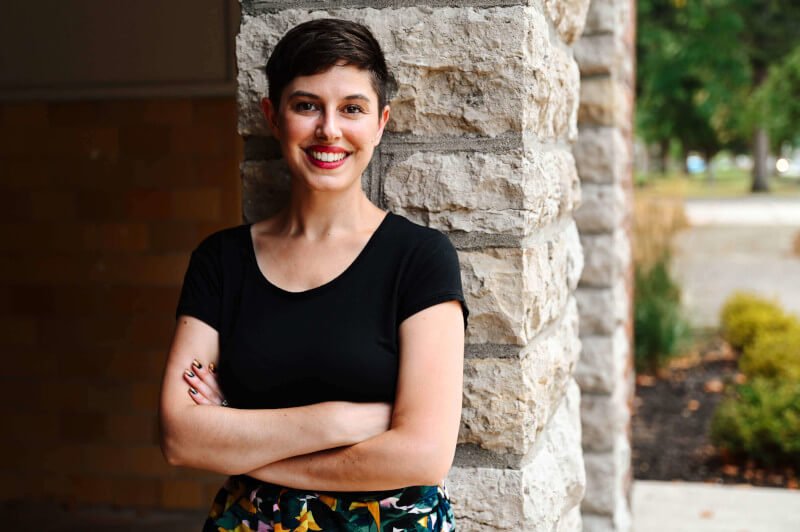 Dr. Bailey Lang is the Literary Witch, a book coach who helps visionary authors reclaim their creative magic and finish their books.
Bailey has a PhD in rhetoric and writing studies, and they love geeking out about writing, language, and magic.
You can sign up for Bailey’s free newsletter, Ink + Alchemy, for monthly missives that will help you build a writing practice you love.