
Goal-Based Sci-Fi Research With Sue Burke
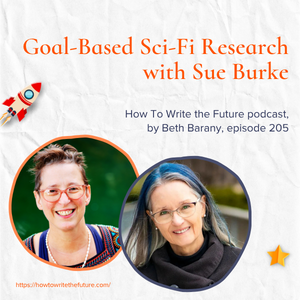
Goal-Based Sci-Fi Research with Sue Burke
***
“One thing I recommend is that if you’re really sure about something look it up cause you’re probably wrong.” – Sue Burke
In this How To Write the Future podcast episode, titled, “Goal-Based Sci-Fi Research With Sue Burke,” host Beth Barany talks to author and translator Sue Burke on the importance of goal-based research and how it can help generate conflict in your stories and avoid clichés.
Platforms the podcast is available on: Apple Podcasts | Buzzsprout | Spotify| YouTube
RESOURCES
FOR CREATIVE WRITING PROFESSIONALS – BUILD YOUR BUSINESS SERVING WRITERS
Sign up to be notified when our training opens and get a short Creative Business Style Quiz to help you create success.
https://bethbarany.com/apprenticeship/
Support our work for creatives!
Buy me a coffee: https://ko-fi.com/bethbarany
GET HELP WITH YOUR WORLD BUILDING – START HERE
Free World Building Workbook for Fiction Writers: https://writersfunzone.com/blog/world-building-resources/
GET SUPPORT FOR YOUR FICTION WRITING BY A NOVELIST AND WRITING TEACHER AND COACH
Schedule an exploratory call here and see if Beth can support you today: https://writersfunzone.com/blog/discovery-call/
About the How To Write the Future podcast
The How To Write The Future podcast is for science fiction and fantasy writers who want to write positive futures and successfully bring those stories out into the marketplace. Hosted by Beth Barany, science fiction novelist and creativity coach for writers. We cover tips for fiction writers. This podcast is for readers, too if you’re at all curious about the future of humanity.
This podcast is for you if you have questions like:
– How do I create a believable world for my science fiction story?
– How do I figure out what’s not working if my story feels flat?
– How do I make my story more interesting and alive?
This podcast is for readers, too, if you’re at all curious about the future of humanity.
About Sue Burke
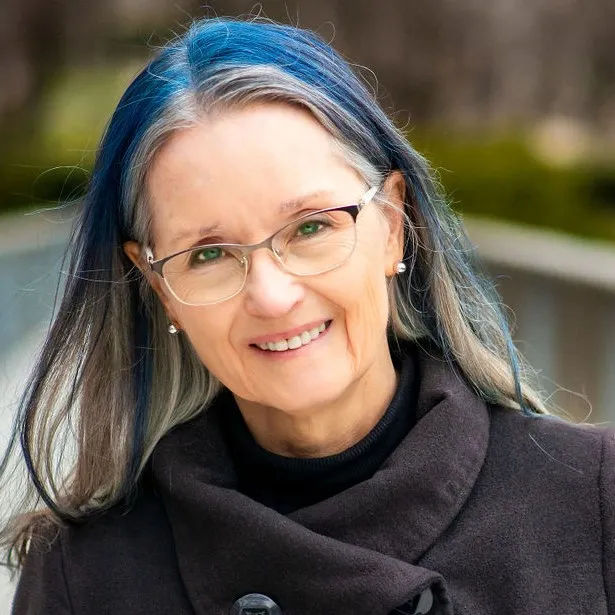
Sue Burke is an author and translator. Her novel Semiosis was nominated for the Arthur C. Clarke Award, John W. Campbell Memorial Award, and the Locus Best First Novel Award. Its sequels are Interference and Usurpation. She has also written the novels Immunity Index and Dual Memory, short stories, poetry, journalism, and essays, and she won the 2016 Alicia Gordon Award for Word Artistry in Translation from the American Translators Association. She was born in the Milwaukee, lived in Texas and Spain, and is now in Chicago.
Website: https://sueburke.site/
Facebook: https://www.facebook.com/burke.sue
X: https://x.com/SueBurkeSpain
LinkedIn: http://www.linkedin.com/in/sueburke/
Instagram: https://www.instagram.com/sueburkespain/
Bluesky: https://bsky.app/profile/sueburke.bsky.social
Transcript for Goal-Based Sci-Fi Research With Sue Burke
Welcome
BETH BARANY: Hello everyone. Welcome to How to Write the Future Podcast. I am your host, Beth Barany. I’m a science fiction and fantasy writer who loves to talk to other writers and futurists and thinkers about how we can all create better futures for humanity.
[00:19] Meet Sue Burke
So I am so excited to have with me today a special guest, Sue Burke.
Sue, can you introduce yourself to everyone listening?
SUE BURKE: I’m a writer and also a translator. I started out as a journalist actually 50 years ago. I was very young and these days I write mostly science fiction. My best known work is a novel called Semiosis which is the first one in a trilogy. And it tells a story about some people who come from Earth and they go to another planet, they’re gonna set up an agricultural colony and they get there and discover that the plants are intelligent. And the thing to know is that most plant many plants do not mind being eaten but they have things they want in return. And that’s true here on earth.
BETH BARANY: Uh, so cool.
[01:09] Goal Based Research
I wanna start, with a focus, which is, How can writers implement goal-based research so they know when to stop searching and start writing? And I have to tell you, this is a very common problem.
I’m a writing teacher, and a coach and editor. And I hear this all the time, that people love their research so much that sometimes it, they don’t get to the writing part. What’s your stance on this?
[01:32] Research for Conflict
SUE BURKE: Well, some of it all of course comes from having been a journalist, and you have to turn something at three o’clock this afternoon so get working but when you’re doing writing it helps to be looking for conflict. And by conflict I don’t mean enemies or opponents. What I mean is things that don’t work well because actually most things in this world don’t really work well. There’s problems and conflicts and for example. So okay I have my planet where there’s plants and they’re intelligent and humans come.
When I was doing my research I discovered it’s possible for a planet to be formed such that there’s not a lot of iron on the surface. There is on our planet there’s plenty of iron but there’s not maybe on this planet. Plants need iron the way that plants also need nitrogen and phosphorus and things. On our planet if plants can can’t get enough nitrogen what do they do? Well they start hunting animals cause we have a lot of that. So okay, on this other planet you might have plants that are intelligent and they need iron and humans show up and like any other animal my blood is red because it’s full of iron so now I have a conflict.
We have plants that are willing to cooperate but they’re hungry and we’re food and so that was the basis of the main plant character is that he’s just got a real problem that he can solve creatively. So look for things that are going to cause you a problem and when you get enough of them you can stop.
Eventually you get a feel for things but here’s one way to think about it so that all right, if you’re running a novel a typical novel length you need about 80 scenes of 1000 words a piece give or take. Do you have enough conflict to do that? If you are a an outliner or a milestoner which is what I do is like here we have the major plot points. Do you have enough to get from hither to yon? And you can start and if you fail or if you need more you can always go back and do more research but try enough that you’re going to take care of that.
If you’re doing something set in Boston you don’t need to know everything you know about Boston. You might just need to know about one restaurant and so you can do that a lot easier.
[03:47] Avoiding Cliches
BETH BARANY: So in terms of research-based conflicts, How can we make sure that we are not falling into cliches? How do we make it fresh, in, in our science fiction and fantasy stories?
SUE BURKE: One thing I recommend is that if you’re really sure about something look it up cause you’re probably wrong and that’s something I learned very early in my career of journalism is that the things that everybody knows are possibly not right. For example whales, when did most of the whales get hunted on our planet?
BETH BARANY: 17, 18 hundreds?
SUE BURKE: Wrong 1960s which is horrifying.
I was alive when they were killing most of the whales.
What went wrong? What was going on? So that’s one of the things and if you want to write something about whales you should probably know that we killed most of them.
Another one. Spanish Inquisition. They killed witches right? No they did not kill hardly any witches. They weren’t not in fact they just pretended they weren’t there cause there’s still witches in Spain. They were after something else entirely. So if you’re going to write about that, five minutes on Wikipedia these aren’t hard things to find out. But cliches are out there and if you’re really sure about something you double check.
Another thing why do we have coal on this planet? Because plants discovered lignin then they started growing and then there was massive quantities of trees but bacteria had not figured out how to break down lignin. So that’s how we got coal was that the trees just did not decompose. On another planet will this happen? Very possibly not or very possibly something else. So these little details can make you develop a planet that can go in a very different way.
Another idea. Okay so we’re gonna have a utopia in the future of the things that would be really nice, I live in a big city and we’re talking about well couldn’t we have like free transport free buses free airlines? It would be a great thing and it really would be a good thing for the city.
What would happen? I checked out a little bit if buses are free they tend to be really crowded cause everyone wants to take the bus .Okay that’s good. That’s a good thing. So you having a romance you’re gonna have the meet cute that you always have so just cute and it’s meet. They’re on a free bus and it’s so crowded they can’t get to each other. They see each other and then how do they meet the next time?
So you’re in utopia at least a transit utopia and people are having trouble falling in love cause it’s just such a wonderful bus system.
BETH BARANY: I love that .Have you ever done some research and you’re like, oh, that changes my idea of the story completely?
[06:18] Rabbit Holes and Shortcuts
SUE BURKE: I’m more likely to use shortcuts well. So I was trying to create another planet and you gotta populate with animals and stuff. And so I decided I’m gonna use drop bearers. Drop bearers are something in Australia that don’t really exist. It’s something they made up to frighten tourists as one more thing in in Australia that’s going to kill you but they don’t really exist but I checked out their lore. They live in trees then they fall down. They have giant claws and they kill you and so I put them on my planet as aliens. It is a shortcut. I also needed more aliens and earth ants are really strange and wonderful things.
Did you know ants can chirp? They’re so tiny you can’t hear that. I’ve seen them do that on my hand and I can’t hear them but they can chirp. They make all sorts of smells that have very specific meanings, that’s how they communicate. They lead complicated lives. A lot of ants are really hairy and I I had some really cool fuzzy aliens that make a lot of noise and smell actually sometimes very pleasant but it means specific things so that was just a shortcut. Could have been a rabbit hole except that there was a wonderful exit from that a quick way to meet things.
Another idea that I should make into a story sometime is that I discovered that what if you went to Mars and you were gonna grow plants like that guy in that movie? You can’t because there’s too much cadmium on Mars. It’s a poison that’s in the soil. This was actually on earth poison. If you went back and tried to eat a tyrannosaurus rex, you’d die because the meat is poisonous because there’s too much cadmium. So if you’re gonna go to Mars you’re gonna have to overcome that. That could be a really interesting story and the reason I say that is is I have al there’s a story that I read. It’s called The Man Who Bridged the Mist and it’s by Kij Johnson and it won the Hugo the 2012 Hugo. And what it is it’s a story of this guy he’s gonna build a bridge. Everyone agrees the bridge is the greatest thing. They want that bridge. It’s a wonderful thing. There are no villains in this story. It’s just that it’s really hard to build a bridge and the story is about how he overcome overcame those problems, and one of them is that he didn’t think he could do that but he did.
BETH BARANY: Yeah.
SUE BURKE: So we’re gonna go to Mars, we’re gonna clean up the cadmium. It’s gonna be hard but we’re gonna do that and then we’re all gonna live there and there’s not gonna be tyrannous rexes cause they’re poisonous. So the stories are out there. You can have all sorts of fun. Another thing I did.
BETH BARANY: Yeah.
SUE BURKE: So I wrote a story it’s in called Who Won the Battle of Arsia Mons and it’s in Clark’s world November of 2017. And I thought the stupidest thing I could do with robots on Mars is have them get into a fight. There’s a battle between robots on Mars and it’s meant as a sport. And so how am I gonna do this? So I poked around a little bit and discovered that there is something called robot sumo wrestling. And it started in Japan but now it’s all over and it’s a fascinating little thing and so they have little robots and they try to fight. And that’s basically how I made my fight scenes as I watched them robots sumo wrestling and I copied their fight moves and it was a lot of fun. But it was also a quick way to get through something I that would’ve been hard for me to figure out . But we had some very fine college students figuring this out for me of how you could make robots try to fool each other in a fighting ring.
BETH BARANY: Yeah. Oh, that’s so wonderful. I love how you have an idea, you go research it, and you enhance your problems in the story because of what you discover.
[10:10] Ideas First Then Research
What comes first for you? A story idea or noodling around in some area of interest, researching some area of interest?
SUE BURKE: It starts with an idea. The one with the robots on Mars was just I saw a meme that said that Mars is the only planet that we know of that is inhabited solely by robots and then I was thinking about that and I just said what is the stupidest thing I can do with that idea? So I start with ideas. Other people start with characters which is fine. I know of one novel that started with the title. You can start with studying any way that you come at it. The question is can you do with that in a way that can be made into a story sometime before you die of old age.
BETH BARANY: That’s right.
[10:58] Notes and Just in Time
So in terms of research, do you take copious notes?
Do you just sort of let it wash over you? Like what are some of the details around that?
SUE BURKE: I take sloppy horrible notes and I also I’ve been at this for a while and I have this idea that when I’ll do enough story research to start the story and then when I get to the part where this is going to happen or they’re going to go there, I will research that part, then I’ll write move on and then I’ll research the next part of it. I have the confidence that I will find out the information when I need to do that. I was a journalist and you need to do that or you lose your job.
BETH BARANY: Yeah. So you have that built in skillset.
[11:36] Current Projects
So what, what, what are you working on right now?
SUE BURKE: Let’s see I’m writing a story that’s a space opera. And as an example of the research at one point I needed to have an alien thing that was like slime molds which are fascinating thing here on earth. So I did as much research as I need to write that part of it. And now I’m going to go and write a part where someone dies horribly and I’m going to need to research all the ways that you feel bad when and survival guilt cause that’s what’s going to come up next.
BETH BARANY: When you do this research, are you saying to yourself, I’m gonna spend an afternoon, I’m gonna spend an hour, I’m gonna spend a few days. Do you give yourself any kind of timeframe around the research period?
SUE BURKE: I try to write a thousand words a day so that gives me an operational problem of how am I going to do this and also meet my quota. But yeah as soon as I have enough I try to go just because I’m old and I’m I wanna finish this before I die.
[12:38] Historical Novel Tease
BETH BARANY: So where can people find out more about you?
SUE BURKE: I have a website. It’s called Sue Burke dot site and everything’s pretty much linked up through them.
[12:49] Writing the Future
BETH BARANY: I like to throw a curve ball at the end of the interview to folks. I always like to ask when you hear how to write the future, what does that mean to you?
SUE BURKE: First of all a whole lot of fun. The sort of person who thinks more about what’s going to happen than what has happened but I also think that there’s a lot of possibilities to write things that that that could be optimistic. There’s lots of problems but problems can be solved. There’s no guarantee that they’re going to but again for my journalism days is I learned that there’s this thing in the city. Can we solve it? Yes we can. Do we want to? Maybe maybe not and that’s what I read about that day is what’s going on with that thing.
BETH BARANY: Yeah. I love that. I love your optimism, and I, I love that.
[13:39] Recommendations and Farewell
Your stories sound fabulous. I wanna recommend them to everyone. Check out Semiosis. Sue, thank you so much for coming on How To Write The Future and sharing with us about your research process and a little bit about your stories that you’re working on.
I’m excited to share this with everyone, so thank you. Thank you so much.
SUE BURKE: Thank you for having me. It’s been fun.
BETH BARANY: Yay.
Loved this episode? Leave us a review and rating here:
https://www.buzzsprout.com/2012061
Need instructions on how to leave a review? Go here.
***
Support our work for creatives: leave a tip: https://ko-fi.com/bethbarany
***
ABOUT BETH BARANY
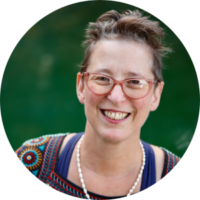
Beth Barany teaches science fiction and fantasy novelists how to write, edit, and publish their books as a coach, teacher, consultant, and developmental editor. She’s an award-winning fantasy and science fiction novelist and runs the podcast, “How To Write The Future.”
Learn more about Beth Barany at these sites:
Author site / Coaching site / School of Fiction / Writer’s Fun Zone blog
CONNECT
Contact Beth: https://writersfunzone.com/blog/podcast/#tve-jump-185b4422580
Email: beth@bethbarany.com
LinkedIn:https://www.linkedin.com/in/bethbarany/
IG: https://www.instagram.com/bethbarany/
TT: https://www.tiktok.com/@bethbarany/
FB: https://www.facebook.com/bethbarany
X: https://twitter.com/BethBarany
CREDITS
- EDITED WITH DESCRIPT: https://www.descript.com?lmref=_w1WCA (Refer-a-Friend link)
- MUSIC CREDITS : Music from Uppbeat (free for Creators!): https://uppbeat.io/t/soundroll/fuzz-buzz License code: UMMKDRL02DFGKJ0L. “Fuzz buzz” by Soundroll. Commercial license: https://musicvine.com/track/soundroll/fuzz-buzz.
- DISTRIBUTED BY BUZZSPROUT: https://www.buzzsprout.com/?referrer_id=1994465 (Refer-a-Friend link)
- SHOW PRODUCTION BY Beth Barany
- SHOW CO-PRODUCTION + NOTES by Kerry-Ann McDade
c 2026 BETH BARANY
For more “How To Write the Future” episodes, go here.
If you’d like to invite Beth onto your podcast, drop her a note here.
✅ Like the work we do? Tip us! https://ko-fi.com/bethbarany
[…] about Goal-Based Sci-Fi Research by Beth Barany for the May 18, Episode 205, of her podcast How To Write The Future. We talk about how to know when to stop researching and start writing, how research can find […]