But I’m Not Artistic by Catharine Bramkamp
 Let’s welcome back monthly columnist Catharine Bramkamp as she shares with us “But I’m Not Artistic.” Enjoy!
***
“The primary benefit of practicing any art, whether well or badly, is that it enables one’s soul to grow.” — Kurt Vonnegut Jr., American author
Art Came Before Agriculture
On a recent trip to the Smithsonian in DC, I discovered this timeline —
100,000 years ago, modern humans made specific tools for fishing and capturing dangerous prey.
About 60,000 years later, humans created paintings and figurines; art.
After 30,000 years of decorating the cave, humans got around to domesticating plants and animals.
First, meat to give our growing brains more protein, next make art, and after that grow wheat to make crackers to serve at the next gallery/cave opening.
Cave art can be carbon-dated, but we can conjecture that even before cave art, 60,000 years ago, humans were decorating wood and cloth, singing, telling stories, creating and sharing dances, all of it necessary to build community, pass along traditions, and make sense of the world.
As humans, we want and need meaning so much that we make it ourselves.
We all are artists.
And you share that impulse.
“But I’m Not Artistic…”
But you protest, I was an accountant!
My profession does not welcome creative interpretation.
Until yesterday, I didn’t know what the A in STEAM stood for.
How can I change my life with art if I can’t do art?
Remember How You Played
Recall the spontaneous activities you did as a kid.
Did you play outside?
There is an entire generation that still remembers going outside to play.
And what did we play?
Mostly activities that risked mortal injury: cobbling together weapons from stones, branches, and string — concocting soup from dirt and leaves (and if you convinced your brother to drink the soup, you were management material).
We made things.
We made up games.
Even children inclined to stay indoors (the next generation) invented or explored.
My children built a working trebuchet in the living room and leveraged that skill to build a giant slingshot to fly cans over the neighbor’s house to the street beyond.
Good times.
From Career Back to Play
After you’ve spent a successful marketing career convincing people to drink dirt soup, what is the second phase?
If your play became your career, walk it back from the career back to the play.
Reclaiming Your Creative Energy
We can resurrect an art from our past in a new way (like playing the ukulele instead of the guitar or piano).
Or we can go big and take all the energy and enthusiasm of our youth and reapply it.
Why not?
Answering the Call to Art
A good life goal is to wake to the call of your art.
You ignore the ache in your lower back, that funny clicking sound from your knees, and hobble to your work — your art.
Working towards a large purpose, the zone, flow, creates beauty.
Your face glows with creation.
All those minor irritations that drove former conversations?
Gone with every step you take towards creating something bigger than yourself.
When you are interested, the world responds by becoming more interesting.
Embrace Imperfect Beginnings
Embrace the fact that all first attempts will be bad.
You’ll throw out a lot of failed glass jewelry, or paintings, or shitty first drafts (thank you, Ann Lamott).
Tossing out all those first artistic attempts can be more difficult than it sounds.
Your instincts scream, don’t ruin a perfectly good canvas with your beginning paint splashes.
Don’t tarnish that beautiful notebook with a clunky poem.
You worry about “wasting” propane and electricity to create a sculpture that looks nothing like the vision in your head.
Yet, if you don’t use your materials, how will you justify their purchase?
How will you justify buying more?
Start Small, Build the Habit
Take a deep breath, pick up the pen, and start.
Work for 15 minutes, or as long as it takes to finish that first cup of coffee.
Done.
You may now go on with your day.
Remember, you are building a habit, and you just accomplished that first step.
Review, Reflect, Repeat
Return to the studio (at first, the dining room table) the next day.
Review the work: Blue on the canvas?
A better word in the poem?
Start completely over?
All legitimate responses and all reasonable as you evaluate and learn.
Finding Value in “Failed” Work
After a week of learning, stop.
How wet is that canvas?
How many cross out words in the poem?
Is the golden-edged journal ruined?
Good.
Yet, maybe that first painting is not as hopeless as you thought.
What colors did you use?
Why?
Is there a movement or moment in the painting that absolutely sings but can’t come through because of its dysfunctional surroundings?
Did you write an awkward sonnet as an experiment?
Great!
Is there a line in that poem that stuns you with its truth to power?
Is there a repeatable metaphor?
Did you line up a single weld that will shape nicely into a stunning arch?
Save What Works
In the review of your “failed” art piece, remove the great line, the perfect swoosh, the newly invented color, and save them in an inspiration file or box.
What gave you joy?
What have you discovered that is worth repeating?
The more comfortable you become with experiments and with making art that doesn’t work at all, the easier it will be to try new things.
Save the pieces you like for later inspiration.
As you progress and work, your own art will feed the generative process.
You will become your own inspiration.
You Are an Artist
The successful day is one where you worked on your art.
Or played in the studio.
Or connected the green dot to the yellow dot.
Say, today I am an artist because I’m holding a pen, brush, harp.
Making art makes you a member of the (somewhat dubious) artist club.
Enjoy.
Learn More
Learn more in my new book — Take Up Space — Art is Your Second Act.
***
Want to read more articles like this one Writer’s Fun Zone? Subscribe here.
***
ABOUT THE AUTHOR
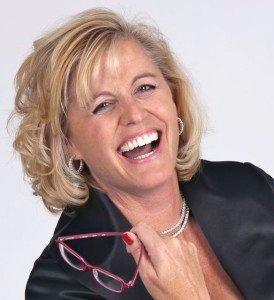 Catharine Bramkamp is a successful writing coach, Chief Storytelling Officer, former co-producer of Newbie Writers Podcast, and author of a dozen books including the Real Estate Diva Mysteries series, and The Future Girls series. She holds two degrees in English and is an adjunct university professor. After fracturing her wrist, she has figured out there is very little she is able to do with one hand tied behind her back. She delights in inspiring her readers.