PhD to Business part 1 by Bailey Lang
 Let’s welcome back Bailey Lang as she shares with us “PhD to Business part 1.” Enjoy!
***
When I finished my PhD in rhetoric and writing studies in 2021, I knew I wasn’t going to stay in academia.
The pandemic had all but obliterated the job market (which hadn’t been in great shape before that), and I was deeply burned out.
I did not want to continue burning myself out for an unlikely shot at a tenure-track role — but neither did I want to go back to a corporate job.
Instead, I built my own business.
I’m now a book coach, the Literary Witch, and my work allows me to combine my academic writing studies expertise with everything I love about supporting writers.
Plus, I get to introduce my own weird, witchy flair in a way that brings real magic to my working life and what I offer to my clients.
As I built my business, I started meeting people who followed a similar path: They got a PhD and, at some point, they became entrepreneurs.
Some launched a company as soon as they graduated; others had positions as lecturers or professors and left those roles.
The PhD-to-business path was almost never discussed during my time as a graduate student.
Many of the people I interviewed shared that experience.
Despite the fact that there are not enough faculty jobs for everyone with a PhD, too few graduate students are presented with any advice beyond trying to stay in academia at all costs.
This gap leaves many graduate students in the dark about alternate career trajectories.
Entrepreneurship isn’t for everyone, as people I spoke with pointed out, but it is a rich, interesting path forward, and one that allows PhDs to use their skills to make a difference and build a career they love.
To start, we’ll learn about the business each scholar created and why they chose to leave academia.
Next time, we’ll talk about the lessons they’ve learned throughout the process.
Allow me to introduce you to some of my colleagues and share what I learned from them about building a business after finishing a PhD.
-
- Taylor Allbright, Allbright Coaching.
Taylor has a PhD in education policy.
Her dissertation was on the implementation of racial justice-intended initiatives at the school and district level.
Taylor is an ADHD coach.
-
- Kate Henry, Productivity Coach.
Kate has a PhD in rhetoric and writing studies.
Her dissertation was on the woman who wrote the first lesbian magazine in the U.S. Kate is a productivity coach.
-
- Amelia Hruby, Off the Grid.
Amelia has a PhD in philosophy. Her dissertation was on feminist aesthetics.
Amelia is a podcast producer and the creator of Off The Grid.
-
- Jessica Kirk, Aspen Gold Consulting.
Jessica has a PhD in management and entrepreneurship.
Her dissertation and research focused on management, gender, sexual harassment, and diversity.
Jessica is a consultant.
-
- Jenn McClearen, Publish Not Perish.
Jenn has a PhD in media studies.
Her dissertation was about women in the UFC.
Jenn is an academic writing coach and developmental editor.
-
- Katy Peplin, Thrive PhD.
Katy has a PhD in film, television, and media studies.
Her dissertation was about the history of animals on screen.
Katy is a coach and community facilitator.
How would you describe your business?
Taylor Allbright
I am an ADHD coach, and I work with professionals who are having executive functioning challenges.
My typical client is someone who is very bright, very accomplished, who is in a PhD program or on the tenure track, or is a doctor or a senior software engineer, or they have these fancy titles.
They have these degrees, and then they hit a ceiling in how far they can go without figuring out how to support their overall executive functioning.
They’re dealing with procrastination, following through, stress management, and then perfectionism, burnout, all the things that go with executive function challenges.
It’ll be people who got by either with a lot of adrenaline and pulling all-nighters, or they happen to be very quick and catch on quickly and could slide by.
I bounced around with different business ideas.
I looked more for a while into general life coaching and stuff around burnout and self-care.
I thought about doing a dissertation coaching business, and then I ended up on ADHD coaching.
My husband has ADHD.
I do not, which is unusual in the ADHD coaching world, from my experience.
My husband, early in our relationship, asked for help finding support around ADHD.
I found out what ADHD coaching was, and I had the thought, “Wow, what a cool job! I wish I could do that.”
And then I put it away because I was like, “I can’t do that. Why would I do that?”
When I was playing around with different ideas for a business, I kept returning to that thought, and finally I was like, “Well, I could do that. Of course I could if I wanted to.”
I started a Substack about ADHD, did a lot of research about ADHD and learned a lot that way, and then enrolled in an ADHD coach credentialing program.
It was very clear that it was exactly the kind of thing I wanted to be working on.
Kate Henry
As soon as I graduated, I knew I wanted to start my business coaching academics, doing productivity coaching.
A couple of years before I finished the PhD, I was publishing online, I was writing blogs, and I was starting to practice coaching.
Over time, I have niched into productivity coaching and supporting project management for people who are in the final stages of finishing a writing project.
People who are like, “I’m out of time, and I have to finish.”
I love working with grad students on their dissertations, but the majority of my clients are professors who are a couple of years from getting tenure and trying to get everything done and not burn themselves out too much with that.
Amelia Hruby
I was a freelance audio editor for a decade (including through graduate school), and for the past five years, I’ve run a podcast production company called Softer Sounds.
I work for myself with a small team of editors and admin support.
This year my work has shifted toward my podcast Off the Grid: Leaving Social Media, where I help creatives make money online without relying on social media.
Jessica Kirk
It’s a consulting business, so I’m working with organizations.
I work with founders in small founder-led firms, and I’m trying to get more business within larger organizations on building capabilities and better ways of working.
A lot of that looks like leader development, learning development programs, or redesigning how people work together with a very strong people focus.
There’s some emphasis on AEC (architecture, engineering, construction) because of my engineering background.
But I have clients that are not in that industry.
I’m still pretty early on in my business, so it’s still evolving.
I taught entrepreneurship at Colorado, and I’m teaching entrepreneurship currently at the University of Missouri St. Louis as an adjunct.
It is a different experience doing it than teaching it.
Jenn McClearen
I do two major modes of work with people that are sometimes separate and sometimes in combination.
I am a coach for academics on writing specifically, and then navigating how you manage the whole job.
I also do developmental editing of the manuscripts themselves.
I always say coaching is working with and supporting a writer, and developmental editing is supporting the writing.
On the coaching side of things, we’re talking about time management or priority management, and working through mindsets that are helpful or hinder getting your writing done, or how you feel about the writing itself.
With developmental editing, I primarily work with book authors who are trying to manage a big, unwieldy project, sometimes for the first time, and they haven’t been trained on what the book genre should actually look like.
I work with scholars in the humanities and the qualitative social sciences, people who are in disparate fields.
I’m getting to dig into these projects or hear about their work in ways that I wasn’t able to as a faculty member, which has been a nice advantage.
Katy Peplin
I founded Thrive PhD in 2017 because I didn’t want all the work I had done to get myself through graduate school to be lost when I left academia.
I now facilitate workshops, teach courses, coach groups and individuals, and facilitate communities for anyone who wants to be a scholar without sacrificing their humanity.
I work primarily with graduate students and early career faculty, but I especially love working with people who are ‘non-traditional’ in some way or another.
I love helping people build a foothold in academia who don’t already have a clear path up that particular mountain.
What made you decide to start a business vs. staying in academia or getting a corporate job?
Taylor Allbright
I had a baby.
Plenty of people have babies and stay in academia.
But there was a little voice that was like, “I don’t know if I like this.”
I was going, “No, it’s great, I love it,” trying to convince myself that I liked it more than I did.
There was a nagging feeling that something wasn’t quite right, that it wasn’t quite a good fit.
There was this confusion in discerning what I liked to do versus what I’m good at doing, and disentangling those.
When I was on maternity leave, I struggled a lot with postpartum depression.
I dreaded going back.
I didn’t want to go back to work — and it wasn’t because I wanted to spend time with my baby.
I had postpartum depression.
I did not want to spend time with my baby.
I started listening to a podcast called The Self-Compassionate Professor, and she was interviewing a lot of people who had left academia.
There was one person who made the decision to leave, also on maternity leave.
She described having this moment where she was like, “I don’t want to do this anymore.”
I was like, “I also don’t want to do this anymore. I feel that way too.”
It started out with listening to the stories of people who had left and envying them.
I had a tenure-track job in a place that I wanted to live, and that’s the dream, right?
I did it.
I had all the things that are really hard to get in this terrible job market, in the way higher ED is set up, which is so unsustainable and manipulative to academics, and I did it.
I had the thing I wanted.
I had the benefits.
The pay was not bad for academia, for social sciences. So there was a lot of like, “I’m supposed to want this.”
And I didn’t.
I was in a privileged enough position, being married to a partner who was employed, that gave me the flexibility to take risks whereas if I had been single and dependent on that income for my survival, it would have looked quite different.
Kate Henry
I developed chronic pain and chronic illness in 2017, and didn’t know if I physically was capable of the pace and output that was required to be a professor.
Up until that point, my whole life, I wanted to be an English professor.
That’s when I started considering alternatives.
Throughout graduate school, I had been doing gigs anyway.
I was doing writing consultant work, or tutoring, or whatever.
I was used to having these nontraditional gigs.
I was actually very excited to do that, and I was very fortunate that my dissertation advisor was supportive as well.
She didn’t judge me; she was very supportive even though I was the only person in my graduating class who didn’t have a job.
Everyone from my program got jobs, and I was like, “No, I’m starting a business.”
I had a professor who was like, “Well, why did you even do the PhD if you weren’t going to go into academia?”
I was excited physically to be able to work from home, to set my own hours, to work with folks around the world in a timeline that worked for me.
I didn’t have the urgency of a publishing schedule or something like that.
That was really super appealing, and still is really appealing.
Amelia Hruby
In my last two years of graduate school, it became very clear to me that getting a job would be nearly impossible.
I watched my peers finish degrees, then work as adjuncts for 3-5 years before landing tenuous one-year lectureships and moving far away for those roles.
I wanted more financial independence and security than the academic humanities path offered, so I sought out part-time employment as I finished my PhD and developed my business alongside that.
I was full-time self-employed about a year after I conferred my degree.
Jessica Kirk
I took a tenure-track position at the University of Memphis and was there for five years.
It was a journey.
It took me a while to come to terms with the fact that this tenure-track academic path was not the right one for me.
I went through periods of, like, “I’m failing at this. I’m not getting publications I need to get or think I should be getting.”
I was losing motivation and wasn’t entirely sure why.
I have two kids that are donor-conceived, and when I was pregnant with my second, I was like, okay, if I’m going to have a second kid on my own, I need to be closer to family.
The isolation of research, even though you’ve got co-authors, was just not well-suited for me.
I’m more of an extrovert, and I like working with people.
With a lot of projects, I was like, I don’t know what I’m doing anymore.
I love research.
I love collecting the data and writing up a paper, but then I’m a year or two into rewriting to try to satisfy these reviewers.
I don’t even know what we’re studying anymore.
I did some work with the Hubble Space Telescope on redesigning the application process for time on their telescope.
It was a huge process because it’s like the telescope to get.
This was right before James Webb was launched.
I analyzed data and worked with them for a few years, and they actually paid for my last year at Colorado to help them redesign it to be more dual anonymous to try to reduce some of the bias in the process.
We got an award from NASA.
I got so much out of it, but nothing that came out of it helped at all for tenure.
Nothing.
No publication meant anything for tenure.
We published in an astronomical journal because people in that community were paying attention.
But it didn’t mean anything for tenure, and that felt misaligned for me. I’m doing work that has a real impact.
It’s very personally satisfying, and it doesn’t mean anything for what I’m trying to do.
I did apply for industry jobs for about a month.
I got my PMP.
I considered all the different paths I could take given my background and everything.
I was like, man, none of these jobs are like what I want to do.
I couldn’t find anything that leveraged the skills and experience that I had.
I always thought consulting would be a good fit for me, but so much of it’s like you have to travel, and I can’t.
I’ve got two young kids on my own, I can’t travel.
It came down to, I’m going to give myself the gift of seeing if this will work.
That is the way that I framed it.
Jenn McClearen
Right after I got my PhD, I moved to the University of Texas and was a lecturer for two years.
I was very much diehard: “I’m going to be in academia for a while.”
I ended up getting a position as an assistant professor, and at first, it was really, really good.
They literally wrote the job description for me.
I felt so blessed because that is not a story that you hear in academia.
It was like survivor’s guilt in a lot of ways.
Several things started happening politically with the pandemic, and the way Texas responded to that, sending us back into the classrooms way too early.
I was very angry about the way that the state government was intervening in our classrooms and our lives and our health.
A series of things just got worse and worse.
There was a greater incursion into how the university was being managed, in that they started attacking diversity and equity, and inclusion.
They outlawed centers around DEI and centers that were supporting marginalized students.
I decided I needed to find another pathway.
I developed my newsletter, Publish Not Perish, while I was still an assistant professor, and part of its goal was to make the system more transparent, to make people feel like they weren’t alone in writing struggles, or in the struggles of navigating academia in general.
I started thinking about ways that I might turn that into a job.
Not only was I dissatisfied with the politics in Texas, but my partner and I also didn’t enjoy living there.
We wanted more geographical freedom.
In academia, you have to go where the job is.
Going into business for myself meant I was able to live where we wanted to live.
We ended up moving to Europe.
I started my business here, which turned out to be a great decision, not just because of the way the politics in the U.S. have gone, but a really good personal decision for us.R
Katy Peplin
My husband took a new job out of state 6 months before I defended my PhD, and when I graduated, I decided to prioritize living in the same state (which was shocking and upsetting to much of my committee).
I actually worked a lot of different jobs after graduation (retail, managing a yoga studio, web design, scheduling in a doctor’s office, developmental editing) and built Thrive PhD along the way.
It’s been less of a conscious choice to be in or out of academia and more optimizing for what I want and need from my work at various points in my life.
Right now, flexibility is paramount (chronically ill parent life is not for the rigid schedule), so self-employment really suits me.
Final Thoughts
I loved learning from these entrepreneurs about how they formed their businesses and why they chose to strike out on their own, even after some of them secured a tenure-track job.
Our academic backgrounds and personal interests fueled the creation of our businesses in powerful and unique ways.
These conversations also reveal many of the structural inequalities that continue to plague higher ED and put people in a position where they have to make difficult choices about their future.
Some of those decisions might have been easier to make if more graduate programs held space to learn from PhD entrepreneurs.
In the next article, we’ll turn to the lessons these business owners have learned as they built their businesses — and what they love most about the careers they’ve created.
***
About the Author
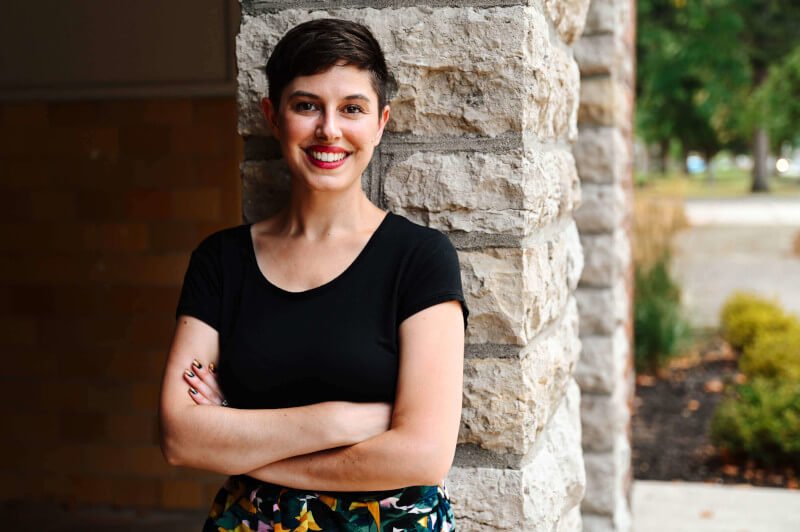 Dr. Bailey Lang is the Literary Witch, a book coach who helps visionary authors reclaim their creative magic and finish their books.
Bailey has a PhD in rhetoric and writing studies, and they love geeking out about writing, language, and magic.
You can sign up for Bailey’s free newsletter, Ink + Alchemy, for monthly missives that will help you build a writing practice you love.