How To Find the Right Illustrator for You with Anna Leitensdorfer
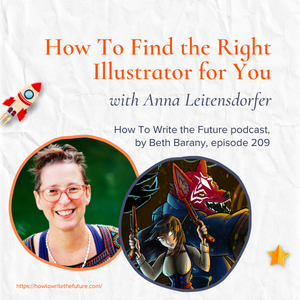
How To Find the Right Illustrator for You with Anna Leitensdorfer – How To Write the Future podcast, episode 209
***
“Since it was my first book cover there, I learned a lot. There was a big process involved. Lots of figuring out, print lingo, making sure things are where they should be. So it was definitely a learning process.” – Anna Leitensdorfer
In this How to Write the Future podcast episode, titled “How To Find the Right Illustrator for You with Anna Leitensdorfer” host Beth Barany interviews book illustrator Anna Leitensdorfer, who creates maps, character art, interior illustrations, and recently completed her first book cover.
Anna explains how authors can choose the right illustrator by narrowing in on style and, for covers, matching genre expectations through comparable titles.
She shares ways to avoid scams, including watching for unsolicited DMs, inconsistent portfolio quality, and verifying prior projects, referrals, and a clear online presence.
Anna discusses timing for commissioning maps and character art, emphasizing the importance of knowing trim size for print work and planning ahead for an artist’s lead time.
She outlines her process and booking system, including contracts, revision stages, deliverables for web and print, and provided specs and files. She also notes she specializes in fantasy and romantasy and enjoys collaborative communication.
00:00 Welcome and Introductions
00:38 Meet Anna the Illustrator
01:18 From Maps to Book Covers
02:38 Choosing the Right Style
05:52 Avoiding Artist Scams
09:09 When to Commission Art
13:01 Booking and Lead Times
14:39 Anna’s Mapmaking Workflow
18:56 Genres and Creative Freedom
20:29 Write the Future and Farewell
Platforms the podcast is available on: Apple Podcasts | Buzzsprout | Spotify| YouTube
RESOURCES
JOIN: For fiction writers! You’ve finished your first draft! Congrats! Now what?
Join the Future-Ready Writer membership and get premium weekly lessons and a monthly Q&A on Zoom. Subscribe: https://www.buzzsprout.com/2012061/subscribe
FREE: Sign up here to get your World Building Workbook for Fiction Writers
Overwhelmed by world-building for your sci-fi/fantasy novel? Use these prompts to brainstorm your story’s world: https://writersfunzone.com/blog/world-building-resources/
SHOP**: Sci‑Fi & Fantasy 24 Writing Prompts:** https://ko-fi.com/s/4ac9160a74
Want to be interviewed on the podcast? => Email us!
FOR CREATIVE WRITING PROFESSIONALS – BUILD YOUR BUSINESS SERVING WRITERS
Sign up to be notified when our training opens and get a short Creative Business Style Quiz to help you create success.
https://bethbarany.com/apprenticeship/
Support our work for creatives!
Buy me a coffee: https://ko-fi.com/bethbarany
GET SUPPORT FOR YOUR FICTION WRITING BY A NOVELIST AND WRITING TEACHER AND COACH
Schedule an exploratory call here and see if Beth can support you today: https://writersfunzone.com/blog/discovery-call/
About the How To Write the Future podcast
The How To Write The Future podcast is for science fiction and fantasy writers who want to write positive futures and successfully bring those stories out into the marketplace. Hosted by Beth Barany, science fiction novelist and creativity coach for writers. We cover tips for fiction writers. This podcast is for readers too if you’re at all curious about the future of humanity.
This podcast is for you if you have questions like:
– How do I create a believable world for my science fiction story?
– How do I figure out what’s not working if my story feels flat?
– How do I make my story more interesting and alive?
This podcast is for readers, too, if you’re at all curious about the future of humanity.
ABOUT ANNA LEITENSDORFER
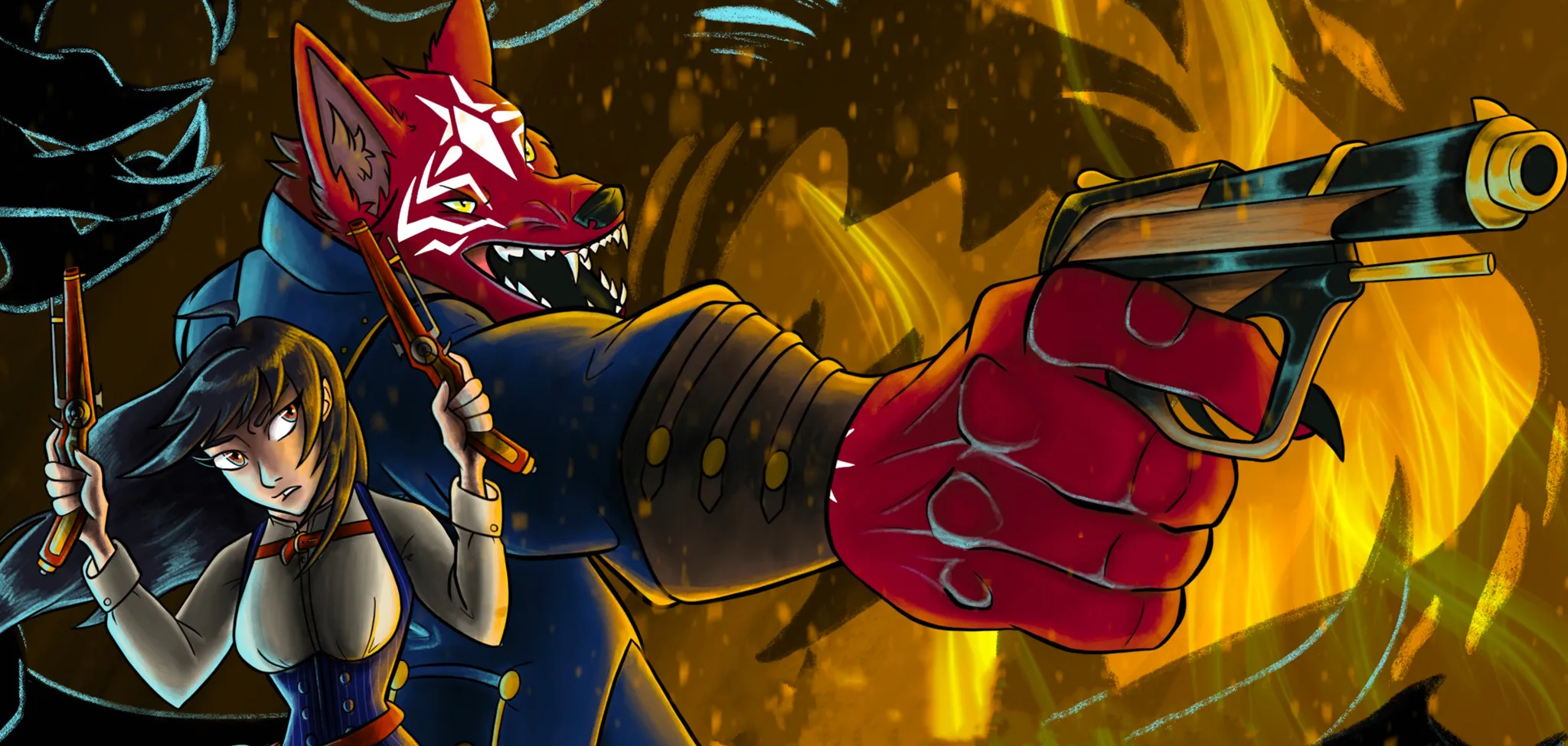
Anna Leitensdorfer is an illustrator specializing in fantasy art dedicated to assisting authors with bringing characters from their books and scenes from their worlds to life in a visual format. With a background in animation, her art style reflects cinematic framing and dynamic posing while also channeling that inner old-timey fantasy vibe! The best part? NO AI in ANY of her work! Projects with dragons are particularly her favorite. She currently lives in Missouri with her 2 Shetland Sheepdogs and is working on writing her own novels while pursuing doing illustration full-time.
Website: https://www.annaleitensdorfer.com/
Instagram: https://www.instagram.com/valkyrie_hero/
Facebook: https://www.facebook.com/anna.leitensdorfer
LinkedIn: https://www.linkedin.com/in/anna-leitensdorfer-288558138/
TikTok: https://www.tiktok.com/@valkyrie_hero
Transcript for Hiring an Illustrator Without Getting Scammed with Anna Leitensdorfer
Welcome and Introductions
BETH BARANY: Hi everyone. Welcome to How to Write the Future podcast. I’m your host Beth Barany, and I am an award-winning science fiction and fantasy author, editor, and teacher. I’m also a keynote speaker and filmmaker. Yep. I have a lot of irons in the fire, and one of the things I’m very passionate about is talking to other creative people who are part of the creative process and making our books, but also do some amazing things that can help us.
So I’m very excited today to bring in Anna. Anna, why don’t you introduce yourself. Tell us what you do and Yeah, I’m excited to jump in.
[00:38] Meet Anna the Illustrator
ANNA LEITENSDORFER: Well, thank you so much, Beth. Hi everybody. My name is Anna. I am currently based in St. Louis, Missouri. Co, I studied animation in college and, things just, one thing after the next and, job wise, it was a very competitive job market out there.
So I decided to look into something a little different. And as it turns out, I illustrate for books now, so I do all kinds of author services for them when it comes to the art side of their books, so they don’t have to worry about it, because that’s my job. I get to make so many, so much pretty artwork and I love doing it and I can’t wait to do more. This is this is my third year doing it, so I’m super excited.
BETH BARANY: That’s so great.
[01:18] From Maps to Book Covers
I don’t remember how we met. It may have been in some other networking group, but I was really excited to hear about what you do both from, just from a filmmaker’s perspective too, because I’ve been working with designers over there, and as a science fiction and fantasy writer, I daydream about the maps. I daydream about my settings. So one of the things I saw on your website is that you make maps and you do character art. Do you also do covers?
ANNA LEITENSDORFER: It’s funny you say that. I actually did my first book cover last month.
Right now it’s just the ebook. The author already has it uploaded to Amazon ’cause she was so excited. It was just a surreal feeling, seeing my cover on Amazon. But, working on the paperback version as we speak. Since it was my first book cover there, I learned a lot. There was like a big process involved. Lots of figuring out print lingo, making sure things are where they should be. So it was definitely a learning process and it’s like a, it’s like a witchy romance or witch fantasy romance, that sort of thing. So she’s just like, we gotta have the two characters on the front cover. And I was like, say no more. I got you.
So, I’m in the middle of finishing the second half of that.
BETH BARANY: Ah, that’s so exciting. So, you’ve written a few articles for our blog Writer’s Fun Zone, and so folks wanna read more about how you work with authors that can go there. But since I have you.
[02:38] Choosing the Right Style
Can you tell us, and this is something I’ve thought about as well, how do you find the right illustrator for your book? And by illustrator are we talking about people who do maps or people who do inset art? like what is the kind of art that you have been providing? And then how do authors find the right illustrator for them?
How to vet them to avoid scams?
ANNA LEITENSDORFER: So I think what it comes down to is just style. What style do you like? And of course that applies depending on which aspect. So character art, you could look at a bunch of different styles, maps, bunch of different styles, but book covers are a bit more narrow. In the sense that if you have a specific genre, you book cover needs to reflect other, you have to look at other comparative titles in that genre. So what those covers will look like. And that’s what your, your cover artist is gonna look at too because when I’m walking around a bookstore and I want to find a, romantasy cover, I’m not gonna be looking in the nonfiction section because all the nonfiction covers are gonna be, bold colors, simple text. Like they’re not gonna be, a bunch of filler gray and like skulls and roses and all that other stuff. So that’s a bit more narrow because you do have to fit the genre expectations when it comes to covers.
Now of course you can do other things as well, but just, keep that in mind.
However, when it comes to maps and character art, you’ve got a little more freedom and it’s just what you like style wise. And what I mean by style, I mean that illustrator’s signature look. So like children’s books have a very distinct style to them.
They’re very whimsy, they’re very colorful. They’re very stylized. I attribute them a lot to fun little, like watercolor paintings. Like children’s book illustrators have a very distinct look to them.
Other styles include anime, cartoony, stylized, painterly, semi realistic, realistic. So when you look for illustrators, narrow down what style you want because you don’t want somebody commenting or placing in a bid and their style is the complete opposite of what you’re looking for.
So that’s how you can narrow down other illustrators.
I have three, roughly three different styles that I’ve been working on over the years. A lot of my interior illustrations, full pages and my illustration boards, which you use to pitch to film studios back in the day. I love doing that size, but that’s more, painterly. So it’s very stylized, very painterly. There’s no outlines, very colorful. With my background in animation, I lean a lot towards cinematic framing, like if I were filming this on a camera for IMAX, what would this shot look like? So I am very partial to something like that.
And then also when I draw character art, that’s a little more stylized on the cartoony side, because in animation, they taught us, take a character but exaggerate, certain features and just keep, drawing it and drawing it until you get a good silhouette or proportions that you really like or just fit that character.
So there’s all kinds of tests involved. So my character art is very, noticeable by line art. I like to do dynamic poses. And I will line art the characters and either painterly the background or line and color the background as well. So mine are a bit more on the stylized side, what you would probably see them in more an animated feature.
So they’re a little bit more on that side as far as style.
[05:52] Avoiding Artist Scams
BETH BARANY: How do you advise authors to avoid any kind of scams with shopping for an illustrator?
ANNA LEITENSDORFER: A lot of authors will be on threads and they will put a call for artists, whether it’s, book cover, character art, maps, what have you. They’ll be like, Hey, I’m looking for a character artist.
They’re gonna get a flood of comments saying, X, Y, Z. There are legitimate ones, but there’s also a bunch of scammers in there. And a big ginormous tell is if they direct message you without your consent. If you both do not mutually agree, for example, in the comment section, then that’s a big tell.
That’s a scam.
And then the second thing is looking at art, their art style.
So, granted I have three art styles and I’m constantly evolving, learning them, how to get better at them. But another big tell is when an artist or a scam account has drew something really bad, two weeks ago, and then they post again and it’s so fully rendered it’s like crazy. And it’s this doesn’t add up. Something isn’t, there’s no way they got that good in two weeks. You wanna see a natural progression. You wanna see styles that are similar. ‘Cause some artists they just work in one style and that’s all they post, which is completely fine.
And then other thing is when you’re vetting artists, look for previous projects. So, for example, on my website, I am not shy. I always ask the authors, Hey, how would you like me to credit you for your IP on my website? ’cause I want people to know this is who I did the work for. Go check out their book ’cause it’s freaking amazing.
So I will name the author and their book and I’ll also name the publication date if it is applicable. Some of ’em, they get the art done way ahead of time, and they don’t have a publication date yet, and some are already published. So depending on that I also list the publication dates so it’s easy to find them because then if you want, you can message the author directly and be like, Hey, I got a question. Well, how was your experience working with this artist? So they know it’s a real person.
So another thing is also asking other authors is a good way to vet illustrators because a lot of authors will find out if their illustrator was AI and they’ll cancel the project and be like, Hey, beware this person, they charged me X amount for AI and not, actual human hand-drawn artwork.
So referrals are also a big thing, because you can always search up. If you’re scrolling Instagram for some reason and you follow a lot of authors and you see artwork pop up and you’re like, Ooh, I love that character art, nine times outta ten, it’ll be signed by the artist, either with their signature or their tag online, and then you can go and find them. Or the author will have them tagged in the description or in the comments so other people can look them up as they want as well which brings me to my next point is their presence. If the illustrator has a very good social media slash online presence, that will do wonders.
My tag on Instagram is the same as threads, TikTok, and X. So it’s easy to find me everywhere and I also like websites because you can showcase your portfolio to a much wider audience.
I like to communicate through email a lot because that way we have records for the both of us. Everything is in writing, so that way we we all make sure we are on the same page.
[09:09] When to Commission Art
BETH BARANY: Let’s jump to timing. Let’s talk about scheduling.
Like, there I am. I’m editing my novel and is now a good time to think about maps and character art for marketing? I personally start thinking about cover design in editing process. I haven’t yet hired anyone to do maps, and I’ve only done some playful, character art, as I was starting to explore my film process for the project.
But I’ve never really tied that kind of thing to the book production process. So what do you recommend? When do authors need to start thinking about, oh, I wanna map, I’m ready to put some funds aside for that, or, oh, I want character art for my Kickstarter or for, marketing.
ANNA LEITENSDORFER: So when it comes to maps, if you’re putting it in your book, I’ve done maps as early as the author had written the first few chapters, and they’re like, I need a map so I know where my characters are going. Like, this is insane. I need to get this mapped out so I know what their journey is. So I’ve done it as early as that, but I always ask them, what is your trim size?
Because if you plan on putting this in your book, you need to know the trim size of your novel. And that goes for any KDP. One of the standards for romantasy, for example, is six inches by nine inches. So anytime I draw the map, I do it based off of those measurements. But I always tell the author, Hey, I can sketch out everything, but I need to know, finalize what your size is before I ink, line, and color, because that is gonna be very hard to change if your trim size changes. So you gotta know your trim size. And that goes for book covers, that goes for children’s books, that goes for interior illustrations. You’ve got to know your trim size and even though you’ve just written a few chapters and you’re like, oh, I still need to finish, draft one, but you’re really set on getting the book done. You gotta know your trim size. Very, very big.
So I can get started on that map as early as draft one or when you’ve edited everything and it’s ready to be published, you just need to put a map in the book. So maps are flexible in that regard. And then as far as character art, that can be done pretty much whenever. I think the best timing for that though, if you really wanna utilize it, is, pre-release of a book. You can use it as a teaser. You can use it as a newsletter, sign up, grab like, Hey, if you wanna see this, if you wanna see character from my upcoming book, you gotta come on, gotta join my newsletter.
So it’s a way authors can, I wouldn’t say suck you in, but draw you into the book so you’re ready for it when it’s published. And I’ve seen, you can go as early as, three or four months before your book releases. But depending on what artists you choose, you gotta look ahead and see A, their prices and if it’s within your budget, and B, if they have openings for that time and see how long it will take them to do. So for me, character art takes about two to three weeks, for a fully illustrated thing with all the fixings. So I can get that done relatively quickly, where some artists, depending on their style, it might take them two months.
So just, touching base with the artists, asking them, Hey, how long is it gonna take you to do this? So you have it in time for your release. Now, you can also get character done after the book has been published as a fun incentive to be like, Hey, if you want a special edition of this book, it comes with character art as well.
So it’s a great marketing tool. And it’s fantastic to use to draw, ’cause I’m an artist, I see pretty art for a book, I’m gonna go run to find out where the pretty art came from. And if it has a book attached, I’m probably gonna buy the book because it looks fantastic.
Character art is just great before the book is out in my opinion because then you can really get that audience, tease them. Then once the book releases, they’re gonna be chomping at the bit to find out what more to the story.
BETH BARANY: Yeah. Great. Yeah. Great promo idea.
[13:01] Booking and Lead Times
And lastly, let’s talk about how people work with you, because you were saying, every artist that you wanna hire is gonna have a lead time.
You need time to make the art of course. There’s also, we gotta build in time, to hire someone. And I’m a producer, so I’m thinking about all of these, like there’s the end product and say the publishing date is here, how early do they need to come in and talk to you? and then how do you work with the authors?
What’s the process that you take the authors through?
ANNA LEITENSDORFER: So I’m gonna start with, looking ahead, So for me, every artist is a little different. I do everything in six month chunks. So at the beginning of January I opened up slots from January till June. And, just letting people know you can book me out as far as June right now.
Now, next month in May, I will open up slots for the rest of the year. So July to December. I’ve already got people asking me and I was like, I’ll open those up in May and then you can pick your slots. But that’s just how I work. Some artists they do it on a month by month basis or they book out as far as a year in advance.
So it really depends. I have a booking schedule on my website. So I have it all on there, like, Hey, here are the slots that are currently open for these months. So even if you’re not ready or you need to save up, you can look further along in the year to see if I have an opening, because you can have the contract signed and ready to go as early as May for work in October, but that just means you’ve solidified your spot. Nobody else has taken that spot so that way you have time to save up the money. And I also offer half and half if that works better within your budget.
So just communicating with the artist, see what their booking schedule is like.
[14:39] Anna’s Mapmaking Workflow
As far as me, I’m gonna do a map example. I love my map example. So when you commission me for a map, we talk all the dirty details. We make sure, do you want continent, regional? Do you want any of these add-ons? ’cause I do offer illustrated borders, icons, accent color, texture, background, and full color. So those are all different add-ons. You can pick and choose which ones you would like, or if you just want the base, that’s totally fine too. So we hammer out all this details in email.
And once those are all finalized, I send out a contract and licensing agreement for the author to sign. I always tell them, please read it over carefully because some, sometimes I will accidentally misspell something or I will have the wrong number. I always tell them, please read it over carefully before signing. That goes for any artist, not just me. And that goes for any artist you do a contract with. So that being said, once all that is done, say it’s for the month of May 1st, I get started. If it’s for a map, I will do three silhouettes. So I’ll sketch out three different silhouettes for a continent, for example. I’ll place all these cities and towns that they described ’cause the author will send me either a sketch version of their map and or a Word document with a bunch of descriptions, and I interpret from there. And then I send the sketches to the author in a flat book with my branding via email and they will, they can either pick one and you’re good to go, or they get a revision stage as well. So if they wanna pick one and make changes or if they wanna see three entirely new silhouettes, perfectly within, it’s built into the price. So revision stage. And then after that revision one is approved, I move onto line art.
So I ink everything I write everything down, put in the name city towns names, put it together. Put in a flat book, send it to the author, after that is revision two. So at that point, checking for spelling, checking for, readability, all that other fun stuff to make sure your map is coming away exactly how you want it. So you get a revision stage after that. And then once that is all approved, then we go on to the finals.
So if your map has any color that will be put in there, any final renderings. And then once that is finished, it gets put into a flat book sent to the author for a final round of revisions if needed.
So there’s three revisions built into my mapmaking process, and then they can either revise or they’re like, Hey, looks good. Good to go. I package it up into a final package. I have an RGV folder for web digital, and I have a C-M-Y-K folder for print. Everything is, everything is prepped and ready to go depending on where you wanna put it.
I also put in a Word document, which has all your specs. So if you ever have like a book designer who’s like, what size is this map? I put it all in the spec sheet so you don’t have to go digging for it. And then I also include a bleed example. So if your book is in print, I give you a bleed example with the gutter and the bleed on the outside.
So when you’re sizing your book, yourself, for example, and a formatting software, you can see how to size the map properly,on the pages. So the bleed area is just what gets cut off. It’s just me showing the author, Hey. Here’s a visual, here’s where the gutter is. That’s why nothing important is in the middle of your map because it’s all going into the center of the gutter. That’s why you don’t wanna put anything important around there ’cause it all folds in. So I gave a bunch of examples that way. And then I also include the Photoshop files that I worked in, because I’m not scared about sharing my process.
The reasoning behind that is in the event your book designer needs to fix something small or they just make a, a couple minor adjustments to suit the size of the book or whatever ’cause that stuff happens. They’re like, yeah, by all means you do you, all I ask is that is the only thing those Photoshop files are used for.
They’re just to make sure you get your tiny little adjustments. They’re not to be used for anything else. So they’re just me just being transparent and letting here’s your files. Have at it.
BETH BARANY: That’s really great. And just for those of us who don’t know, what is flat book? Is, that’s a piece of software?
ANNA LEITENSDORFER: It’s a PDF, with my branding on it, and it’ll have my name, the author’s name, the project type for example, your fantasy map and on the back it’ll list, if it, what stage it was or what revision it was. You can look back and see like the progress made or if it’s like your, for your records kind of thing.
So it’s just a way for artists to showcase their work in a professional manner.
BETH BARANY: Well, I think you’ve given us a really thorough discussion and overview of what it’s like to work with illustrators, what it’s like to work with you.
[18:56] Genres and Creative Freedom
Is there anything else that you wanna offer up to authors? What’s your favorite kind of genres do you work with? Is it science only? Science fiction and fantasy, romantasy, that kind of thing. And what do you, who do you like to work with?
ANNA LEITENSDORFER: Going back to our style conversation earlier is when looking for artists, look at what genres they specialize in.
So I specialize in fantasy and romantasy. I love drawing creatures as well. So like unicorns, dragons, love that stuff. I also have done some sci-fi, some dystopian maps.
I’m open to other ones.
BETH BARANY: Mm-hmm.
ANNA LEITENSDORFER: If you like the style, so it just comes down to the style. Authors I love working with are ones who are just like, here’s a general overview or here’s the scene that I want drawn, but do whatever you want, man. So they can give me the scene, but I could draw it differently than how it’s depicted. I think like a camera movement. If you’re looking at something dead on with a camera, well, I might be thinking of the scene as an overhead shot. So a little different than what the author had in mind.
So I like doing a lot of that. An author I’m working with right now. I was like, Hey, How would you like me to draw this dog for your interior? And she’s just like, well, here’s some descriptions of him, but honestly, do whatever you want. And I was like, okay, I love that. I just like little bit of freedom is nice, but I also wanna make sure that it’s exactly what the author had in mind and communication is real big.
So when me and the author are just messaging back and forth, just nerding out over sketches, it’s so much fun. I enjoy it so much.
BETH BARANY: That’s so great. Oh, I love it.
[20:29] Write the Future and Farewell
As we wrap up this interview today, I wanted to ask you a question that I like to ask all my guests, which is, when you hear how to write the future, what does that bring up for you?
ANNA LEITENSDORFER: To me, it brings up, changing the norms, taking genres and changing them up a little. Because from personal experience, some of my favorite genres, romantasy for example, but I wanna see something a little more. Something a little different, but still in the same genre. So I think how to the future is thinking of unique ways to I wouldn’t say reinvent the genre, but make it your own. Just make it something that that you really love.
BETH BARANY: Yeah. I love it. Oh, I love it so much.
And just to remind everyone where they can find you on the socials, on your website, what’s your tag? What’s your website?
ANNA LEITENSDORFER: So my website is www.AnnaLeitensdorfer.com. And on my socials, I am on Instagram, TikTok and Threads mainly. I do have an X, but I mainly post to the other three. My tag is AT (@) all lowercase valkyrie_hero.
BETH BARANY: Fabulous. I love it. I love it. I love it. Well, thank you Anna. And everyone, be sure to check out Anna’s work on the socials on your website. Also, Anna writes for our blog where she goes into great depth on how to work with Illustrator, and other awesome tips for authors and working with illustrators.
So thanks again, Anna, for coming on to How To Write the Future. I so, so appreciate it. Everyone. That’s it for this week.
ANNA LEITENSDORFER: Thank you so much for having me.
BETH BARANY: Write long and prosper. Alright, that’s a wrap.
Loved this episode? Leave us a review and rating here:
https://www.buzzsprout.com/2012061
Need instructions on how to leave a review? Go here.
***
Support our work for creatives: leave a tip: https://ko-fi.com/bethbarany
***
ABOUT BETH BARANY
Beth Barany is an award-winning fantasy and science fiction novelist and creativity coach for writers. They help novelists write, revise, and publish stories that matter—blending practical craft guidance with a big-picture commitment to imagination, meaning, and possibility.
Learn more about Beth Barany at these sites:
Author site / Coaching site / School of Fiction / Writer’s Fun Zone blog
CONNECT
Contact Beth: https://writersfunzone.com/blog/podcast/#tve-jump-185b4422580
Email: beth@bethbarany.com
LinkedIn:https://www.linkedin.com/in/bethbarany/
IG: https://www.instagram.com/bethbarany/
TT: https://www.tiktok.com/@bethbarany/
FB: https://www.facebook.com/bethbarany
X: https://twitter.com/BethBarany
CREDITS
- EDITED WITH DESCRIPT: https://www.descript.com?lmref=_w1WCA (Refer-a-Friend link)
- MUSIC CREDITS : Music from Uppbeat (free for Creators!): https://uppbeat.io/t/soundroll/fuzz-buzz License code: UMMKDRL02DFGKJ0L. “Fuzz buzz” by Soundroll. Commercial license: https://musicvine.com/track/soundroll/fuzz-buzz.
- DISTRIBUTED BY BUZZSPROUT: https://www.buzzsprout.com/?referrer_id=1994465 (Refer-a-Friend link)
- SHOW PRODUCTION BY Beth Barany
- SHOW CO-PRODUCTION + NOTES by Kerry-Ann McDade
c 2026 BETH BARANY
For more “How To Write the Future” episodes, go here.
If you’d like to invite Beth onto your podcast, drop her a note here.