Create Your Own Art Community by Catharine Bramkamp
 Let’s welcome back monthly columnist Catharine Bramkamp as she shares with us “Create Your Own Art Community.” Enjoy!
***
“Community helps me be a better artist. It’s imperative to be able to ping pong ideas off other creatives & makers. There’s also a social energy that comes about when artists get together in a room together. Ideas begin to flourish and it’s a remarkable thing.” — Jeff Golenski, A photographer for JetPack.
Artists Need Other Artists
I searched through my library to find examples of creative communities and after collecting a dangerously high stack of books, realized there are few artists who did not belong to an artistic community.
From the pre-Raphaelites to the Impressionists to the Surrealists to the women of New York City’s 9th Street to the Beats to you, artists need each other.
We need to discuss our art with people who understand the language.
We need inspiration and helpful criticism.
We long for support and feedback.
We need to know we are not crazy.
We need our friends.
Lady Gregory and the Irish Renaissance
Lady Gregory (1852 – 1932), married an English Lord but was a life-long resident of Ireland.
She not only was devoted to preserving the indigenous Celtic language but she also headed and supported the Irish Renaissance and was the founder and sustaining member of the Abby Theater specializing in Irish plays.
She supported WB Yeats, and helped him master the local dialects in his plays.
She defended JM Synge’s inflammatory The Playboy of the Western World (1907).
Lady Gregory researched, wrote, and produced her own plays, which were more popular than either Synge or Yeats (together).
More importantly, she nurtured and encouraged Irish artists in their efforts to return Irish history and traditions back to their own people.
Mabel Dodge Luhan’s Artistic Haven
Mabel Dodge Luhan (1879 – 1962) was born to be a salon hostess.
Her well-to-do family encouraged her to follow her bliss.
She first concentrated on collecting art then advanced to collecting the artists themselves.
She retreated from the industrial north to New Mexico renovating and building out the Mabel Dodge Luhan House attracting both writers and visual artists like DH Lawrence, Willa Cather, Jean Toomer, Georgia O’Keefe, and Ansel Adams.
Luhan offered accommodations, and respite, but her job was Artist Muse.
She encouraged and at times, bullied her artist friends to create and be their best selves.
And they did.
The Bloomsbury Group
Finally released from catering to her overbearing father, painter Vanessa Stephen (1879 – 1961) started up evening salons in her home.
She essentially created what was even then called the Bloomsbury Group.
From her husband Clive to her sister Virginia Woolf, this group of friends gathered every week to talk, paint, organize shows, and inspire each other to do their best work.
Clive Bell, Vanessa’s husband was a formidable art critic and Roger Fry, Vanessa’s lover, was the first gallery owner to show the work of the Post Impressionists inspiring the art changing exhibit in New York City, The Armory Show (1913).
These infamous community members argued, fought, featured each other in novels and paintings, slept with each other’s partners and ultimately served as the Muse to improve their art and increase the opportunities to share their art with the world.
Many were wealthy enough to not care if the art sold or not, a very nice place to be.
Why Community Matters
Can you go it alone?
In the beginning when you are just getting your work together and figuring out your vision, yes.
But eventually, or even tomorrow, you’ll want and need a group, your people, your tribe.
Tribes are important.
Ezra Pound started, essentially, a Go Fund Me campaign to raise enough money so his friend TS Eliot could quit his bank job and write poetry full time (Eliot declined the help).
Lady Gregory’s lover, John Quinn, defended Margaret Anderson and Jane Heap during their 1921 obscenity trial in NYC.
The work?
Ulysses, which Sylvia Beach took on and published in Paris in 1922.
Creative Communities Through History
Artists are famous or infamous for shocking their staid community.
Lady Gregory shocked audiences by accident but some of her playwrights did it on purpose and she stayed with them.
Members of the Bloomsbury group shocked on purpose, as did the Beat Poets.
In post-war Paris, women like Gertrude Stein and Sylvia Beach fled US Prohibition and cramped ideas about gender to find their own loves and lives in the City of Light.
When artists move into an affordable town or urban neighborhood, they immediately upgrade and improve the space.
The city of Detroit even offered artists the chance to live in abandoned houses rent free.
The artist need only agree to contribute art to the community.
To date, several homes have been restored, and the program, though small, is lauded for its creative approach to neighborhood revitalization.
Research on Creativity and Collaboration
In their article Collaboration and Creativity: The Small World Problem, authors Brian Uzzi and Jarrett Spiro commented, “ Many of history’s great creators — such as Beethoven, Marie Curie, the Beatles, and Maya Angelou — were involved in creative networks in which members critiqued, encouraged and collaborated on each other’s projects.”
Building Community Around a Project
A big project will often create its own community.
A friend is writing a play on a forgotten philosopher, she is also writing the annotations and history of the play.
She is contacting theaters and spaces to bring the play to life.
She meets with conference organizers and scholars.
She even met the philosopher’s granddaughter.
The entire project has gathered a creative community around her.
She is self-publishing her play/annotated book because she may not have much time to waste with traditional outlets.
She is 87.
Start Small: One Friend Is Enough
Community can be as simple as one friend.
When Natalie Goldberg was writing her first book (Banana Rose concurrently with Writing Down the Bones) she scheduled meeting a friend at a local cafe at 3:00 PM.
Whether the friend actually showed up wasn’t the point.
At 3:00 PM, Natalie showed up and wrote for an hour.
It was her way of creating accountability, and getting out of the house. Invite one friend.
Encourage her to invite another friend — he invites a third.
Online Communities Count Too
Or meet online.
Many newsletters and missives I receive, invite readers to join the online writing group.
Members Zoom in, check in, then write together.
Artists must meet, they must exchange ideas.
Artists worked together out in the fields (haystacks, lakes, train stations).
For female artists, working with another artist was necessary, as working in public was risky.
If you are a musician and you play in a band or symphony you are lucky, there is no other choice but to literally play nicely with others.
Create the Community You Need
Creating your own artist community is worth the effort.
The group will support you and your art will thrive.
More importantly, you will too.
Learn More
Look for my new book — Take Up Space — Art is Your Second Act.
***
Want to read more articles like this one Writer’s Fun Zone? Subscribe here.
***
ABOUT THE AUTHOR
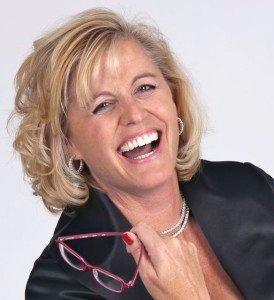 Catharine Bramkamp is a successful writing coach, Chief Storytelling Officer, former co-producer of Newbie Writers Podcast, and author of a dozen books including the Real Estate Diva Mysteries series, and The Future Girls series. She holds two degrees in English and is an adjunct university professor. After fracturing her wrist, she has figured out there is very little she is able to do with one hand tied behind her back. She delights in inspiring her readers.