When Hell is Other People by Catharine Bramkamp
 Let’s welcome back monthly columnist Catharine Bramkamp as she shares with us “When Hell is Other People.” Enjoy!
***
“Hell is other people.” — Jean-Paul Sartre, Author of No Exit.
The Endless Pull of Other People’s Needs
We love our people.
But our people have needs; their needs wax, wane, and change over time, or over an hour.
Their needs carry multitudes, and apparently no one in the house can find the ketchup in the refrigerator faster than you.
No one in the family has faith there is still ketchup in the house.
You abandoned your novel work in progress and march to the kitchen, pull out a broad collection of ketchup bottles, and return to your work.
I am on call to help with home improvement projects, which theoretically makes sense since I live in the home:
- windows need cleaning;
- closet doors need planing
- blinds need dusting.
There is an acre of yard that needs, in no particular order:
- Mowing
- Thatching
- weed killer
- moss be-gone
- stick removal
- stump destruction
- Meticulous edging.
If I am not in that yard helping, working side by side with my husband, I risk overwhelming guilt.
Every time I squint through the dirty window, I feel compelled to drop my work and shuffle outside to leaf blow the patio, then clean the window, then all the windows. . .
Until one chilly November day it dawned on me that home improvements, gardens, committees, family drama, children’s needs are as unending as an Escher stairway.
We don’t finish gardening, meetings, holiday prep, projects, meetings, or events.
We only press pause.
We can abandon them for a week or two.
We can vacation.
But they will always circle around and around, reappearing yearly, monthly, hourly.
When Creative Time Is Sacrificed
One morning I sacrificed (and I used that word specifically) my writing time in favor of mowing the lawn.
Not a big deal, I thought.
But it was a big deal.
Morning is my creative time.
But THIS morning was mission-critical to my husband’s fertilizing project.
My job was mowing; his job was following me with the lawn fertilizer hours before the predicted rainfall and the onslaught of hot summer days.
Totally fine, happy to help.
But the rest of the day just crumbled away.
The lawn was happy.
The husband was happy (as he scrutinized the yard for more things that needed attention).
I was decidedly unhappy.
The Invisible Nature of Creative Work
One of the challenges of protecting our art time is that when we are in the throes of creating, it doesn’t look like much.
Writers stare out the window, musicians repeat a chord progression, painters scrutinize a paint color.
If you are composing a symphony, you are likely sitting still, which in most families is a trigger event.
You are just sitting there;
- come help hang this picture
- install this bookcase
- wrestle this enormous desk through that narrow doorway.
The ask is not malicious; it’s a compliment that they want your help and, often more importantly, your company.
And you are just as inclined to help because the activity is mutually beneficial.
But that music needs you too, and once interrupted, that moment of creativity is lost.
Tomorrow, and tomorrow, creeping into your time with little cat feet, and before you know it:
- Your sister calls to tell you she is leaving for a retreat
- Can you pick up the dogs at 10:00 AM?
- Be sure to lock the back gate
- Remember Fido is on a special diet of hand-shredded chicken and imported liver pate.
How did this happen?
Does it help to know that you are not unique?
Historically, female artists have pushed, resisted, and despaired about creeping and often overwhelming time encroachment (and now we share the problem with everyone! You’re welcome.)
The process of making art just doesn’t LOOK important (except for found art sculpture, which has the advantage of size, noise and fire: far more impressive than composing poems), and worse, we often work directly in the line of sight (which is why those rooms of our own are important — out of sight, out of the way, unavailable for picture hanging).
It implies we are both ready and able to help with anything or everything.
Protecting Your Creative Time
But we are not.
We are working on art, and yes, it is important.
Assure your family you love them, but they are probably quite capable of hanging that picture themselves.
They may also possess superior lawn mower blade sharpening skills, and just in case, all four bottles of ketchup are arranged like a firing squad on the first shelf of the fridge.
Two things will happen.
You will control your time.
Fed up with waiting, they may just do it themselves.
Remember to praise their good work.
Learn More
Look for my new book — Take Up Space — Art is Your Second Act.
***
Want to read more articles like this one Writer’s Fun Zone? Subscribe here.
***
ABOUT THE AUTHOR
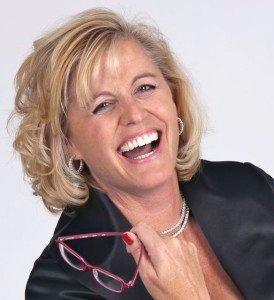 Catharine Bramkamp is a successful writing coach, Chief Storytelling Officer, former co-producer of Newbie Writers Podcast, and author of a dozen books including the Real Estate Diva Mysteries series, and The Future Girls series. She holds two degrees in English and is an adjunct university professor. After fracturing her wrist, she has figured out there is very little she is able to do with one hand tied behind her back. She delights in inspiring her readers.