Read, Write, Repeat with David D. Levine
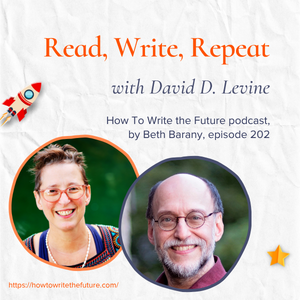
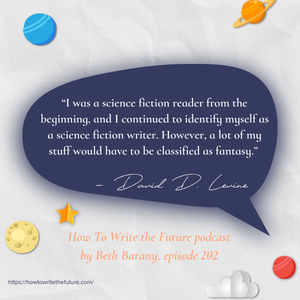
Read, Write, Repeat with David D. Levine – How To Write the Future podcast, episode 202
***
“I was a science fiction reader from the beginning, and I continued to identify myself as a science fiction writer. However, a lot of my stuff would have to be classified as fantasy.” – David D. Levine
In the latest How To Write the Future podcast episode, titled “Read, Write, Repeat with David D. Levine” host Beth Barany talks to science fiction author David D. Levine about his career path, the challenges of history research, and how he uses it in his novels, including gender throughout the ages.
Platforms the podcast is available on: Apple Podcasts | Buzzsprout | Spotify| YouTube
RESOURCES
FOR CREATIVE WRITING PROFESSIONALS – BUILD YOUR BUSINESS SERVING WRITERS
Sign up to be notified when our training opens and get a short Creative Business Style Quiz to help you create success.
https://bethbarany.com/apprenticeship/
Support our work for creatives!
Buy me a coffee: https://ko-fi.com/bethbarany
GET HELP WITH YOUR WORLD BUILDING – START HERE
Free World Building Workbook for Fiction Writers: https://writersfunzone.com/blog/world-building-resources/
GET SOME FREE WRITING COACHING LIVE ON THE PODCAST
Sign up for the 30-minute Story Success Clinic with Beth Barany: https://writersfunzone.com/blog/story-success-clinic/
GET SUPPORT FOR YOUR FICTION WRITING BY A NOVELIST AND WRITING TEACHER AND COACH
Schedule an exploratory call here and see if Beth can support you today: https://writersfunzone.com/blog/discovery-call/
About the How To Write the Future podcast
The How To Write The Future podcast is for science fiction and fantasy writers who want to write positive futures and successfully bring those stories out into the marketplace. Hosted by Beth Barany, science fiction novelist and creativity coach for writers. We cover tips for fiction writers. This podcast is for readers too if you’re at all curious about the future of humanity.
This podcast is for you if you have questions like:
– How do I create a believable world for my science fiction story?
– How do I figure out what’s not working if my story feels flat?
– How do I make my story more interesting and alive?
This podcast is for readers, too, if you’re at all curious about the future of humanity.
ABOUT DAVID D. LEVINE
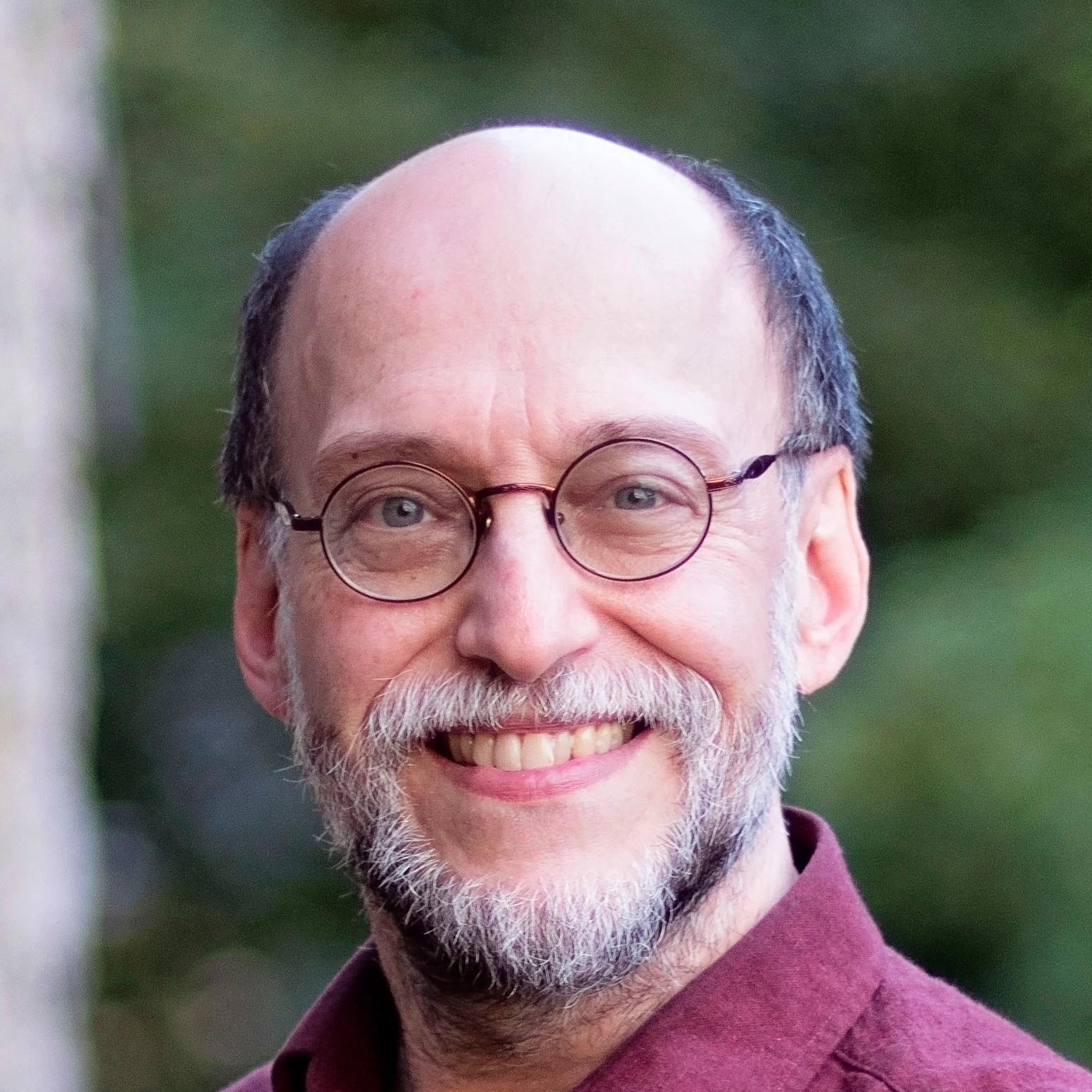
David D. Levine is the author of Andre Norton Nebula Award winning novel Arabella of Mars, sequels Arabella and the Battle of Venus and Arabella the Traitor of Mars, space-opera caper novel The Kuiper Belt Job, and over sixty SF and fantasy stories. His story “Tk’Tk’Tk” won the Hugo, and he has been shortlisted for awards including the Hugo, Nebula, Campbell, and Sturgeon. Stories have appeared in Asimov’s, Analog, Clarkesworld, F&SF, Tor.com, numerous Year’s Best anthologies, and his award-winning collection Space Magic.
Facebook: http://www.facebook.com/david.d.levine.sf
Instagram: https://www.instagram.com/daviddlevine/
Website: https://daviddlevine.com
Bluesky: https://bsky.app/profile/daviddlevine.com
Transcript for Read, Write, Repeat with David D. Levine
Welcome And Guest Intro
BETH BARANY: Hi everyone. Welcome to How to Write the Future. I’m your host, Beth Barany. A science fiction and fantasy writer, also writing teacher and creative entrepreneur trainer.
I’m so excited to bring in today my special guest, David Levine.
David is a science fiction and fantasy writer, primarily science fiction.
Can you introduce yourself to us?
DAVID D. LEVINE: Sure. The weird thing is I still think of myself as being a newer writer, even though I’ve been selling for over 25 years, but it’s always fresh. Every day is a new challenge, a new obstacle to be overcome.
BETH BARANY: I love your book covers. I excitedly called my husband over. I’m like, look at this awesome book. Your Kuiper Belt book, the Heist Sci-fi. I love heist.
[00:42] Sci Fi Versus Fantasy
So do you consider yourself a fantasy writer or a science fiction writer, or both? A mix? I saw you have a cool anthology called Science Magic, which really kept my attention.
DAVID D. LEVINE: I was a science fiction reader from the beginning, and I continued to identify myself as a science fiction writer. However, a lot of my stuff would have to be classified as fantasy.
BETH BARANY: That’s great to know. I work with a lot of beginning writers and folks are working out the definitions and where they fit and how to describe their work.
[01:10] Tech As Modern Sci Fi
DAVID D. LEVINE: An awful lot of thrillers are by my standards would be considered science fiction because they depend on technologies that don’t exist.
Or you look at so many cop shows, the various criminal investigation shows are based on technologies. They portray technologies that don’t exist, which causes real lawyers and real police people a lot of difficulty when they try to talk to a jury and the jury says, show us the hologram.
BETH BARANY: Absolutely. Yeah. I write sci-fi mysteries, so I take great pains to figure out what exists and what doesn’t exist. And of course, I’m making stuff up. And then sometimes engineers write me and tell me what I got wrong.
DAVID D. LEVINE: Yeah.
BETH BARANY: Which is hilarious.
[01:49] History Research In Fiction
I see that you’ve set a lot of stories set in an imagined past, and that really is reflected in your beautiful book covers. Can you talk a little bit about how your historical research and it sounds like you’re definitely a student of history, how that impacts your writing?
DAVID D. LEVINE: The weirdest stuff in my historical science fiction and fantasy is real. You know, the more peculiar and unbelievable something is, even if it’s like key to the plot. I’m not making any of that stuff up. I’ve found things I think it’s in the third Arabella of Mars book, there’s a steam powered wheelchair, equipped with a machine gun that is real, or at least it was proposed.
I don’t know if the person that invented it ever actually built it, but they tried to sell it to the military. All kinds of peculiar things. Real terminology, real people. There is a character, again in the Arabella books, who is a person who became a very famous military surgeon and in fact, invented a lot of techniques that saved many lives. And was the first person to perform a cesarean section where both the mother and the child lived. That person was a woman.
[02:56] Gender in Other Times
It’s tough to talk about gender in other times because if that person existed today, we would probably say, well, that person was using he him pronouns in their daily life, so it would be respectful to refer to them as he him, but we don’t know what that person would’ve used themselves because they were practicing a deception.
Were they living their true reality of the gender they perceived themselves as being, or were they dressing up as a gender they did not perceive themselves as being for purposes of having a career and being able to leave the house?
There was all sorts of roles that were imposed on people based upon their perceived gender and therefore people would change their perceived gender, in order to have adventures.
That’s why Arabella dresses up as a boy, because, that is a thing that people definitely did do in reality, and happened, I believe even more in fiction of girls dressing up as boys, and running off to sea and becoming cabin boys and fighting in the wars and having adventures.
One of the writing challenges I have set myself and still not succeeded at is literature is full of girls who dress up as boys to have adventures.
When boys dress up as girls, it’s either for comedic value, or in order to escape. You look in particular at the movie, Some Like it Hot, where a couple of boys dress up as girls in order to hide from people who want to kill them.
That is a challenge I have set myself at which I have still not succeeded. I’ve thought a lot about gender. I’ve thought a lot about why we perform gender as we do, which things are inherent, and which things are societally imposed. And how does it change over time? The roles of men and women of course have always changed over time. Pink used to be a manly color. There have been thousands of years when everybody wore what we would consider skirts. Everybody wore what we would consider pants. So that distinction is something that is very much peculiar to this time and place.
[04:49] Starting Late And Career Path
BETH BARANY: I appreciate that you’re doing that.
I understand that you didn’t start writing fiction until you were nearly 40, so I think that’s a really wonderful to hear, for folks to hear. I myself didn’t start seriously until I was 30. I know people who started much younger. Let’s not measure each other against each other,I actually have a writing friend who started at 70.
DAVID D. LEVINE: I would absolutely say it’s never too late to start. I was writing fanfic, well, I didn’t write fanfic in the modern sense, even though it existed.
I was never impelled to write about my favorite TV shows or what have you. I wrote science fiction in my teens. I know for sure that I have stories in my files that I wrote, in like fourth grade. So I’ve been writing for a long time, and I took a science fiction class in college and the teacher said, this is really good, you should submit.
What happened was that I graduated, and I got a job as a technical writer. I was writing software documentation and that sopped up all of my writing energy. I tried and I was unable to write fiction while I was writing as a technical writer. And I was a technical writer for 20 years.
So during that whole time, I produced not one word of fiction. I changed careers, I changed from technical writing to software engineering, so I was still working in the same, you know, sitting in the same cubicle, working in the same division of the same company, and a different boss. And I had a different job.
And even though I was still typing, still staring at the same screen every day, suddenly I was no longer writing prose, I was writing code. And so I began to be able to write fiction again. So I spent 20 years writing technical manuals, and then I started to be able to write fiction again.
[06:27] From Tech Writing To Prose [h3]
And after I’d been doing that for just a couple of years, I had the opportunity to go to the Clarion West, six week writers workshop in Seattle.
And I did so, and after I did that, I began selling. So I would say that the 20 years I spent writing technical manuals was not lost, because I spent 20 years learning how to put together a sentence, how to punctuate, how to spell, where to break a paragraph, how to outline, how to work with an editor. Ergonomics, how to pace myself, how to be productive, grammar and pacing. And there are so many skills from nonfiction technical writing that translated directly into fiction. And so I spent 20 years working on the mechanics of putting prose on the page. And then after I had done that, I had a really solid base of that stuff that beginning writers struggle with. And so what I had to do after that was add to that skills of creating characters and writing dialogue and and world building.
But even on world building, I think some of my nonfiction skills applied, so I divided my learning how to write process in two. One for the mechanics and one for the fiction. And I think, the fact that I started selling fiction to major markets within a couple of years of when I started submitting, I can put that down to the time that I spent working on the mechanics of writing.
So I wouldn’t necessarily recommend this as a learning process, but it worked for me and I think it, it produced a writer who has a particular skill set and produces a particular kind of fiction, which is, not to–, nothing is to everybody’s taste. My stuff is not, it’s not poetical.
I’ve got creativity in terms of the world building. I’m very proud of my aliens and of the unexpected plot twists I can come up with, but the prose itself is quite conventional. I do not, I’m not as Jay Lake described himself as a notorious style monkey.
I’m not a notorious style monkey. The prose is, my prose is intended to be transparent, not to get in the way of the reader’s experience of what? Of the the, you know, the world and the people being, being, portrayed. But it gets the job done. And I do, I do have a big vocabulary and I use it.
BETH BARANY: Mm-hmm.
[08:46] Influences And Reading List
I was curious about your reading habits because to be able to have gone from a tech writer into some great training for science fiction fantasy, and then to be published, I’m guessing that you have read widely all your life. And I just, if you wanna throw out a few of your favorite authors series, the kinds of things that you like to read, have read, besides the nonfiction history, I’d love to know what your story bank is like.
DAVID D. LEVINE: I would name Iain Banks, as one of my favorite writers and, I’m gonna have to name Larry Niven as one of my primary influences. Although the weird thing was, is that when I first discovered him, he was one of the Young Turks. And, and now of course he’s, you know, he’s in his seventies, definitely part of the old guard.
I don’t think I would name Niven as one of my favorite writers anymore because his prose is very much of the seventies, and hasn’t held up well. Mary Robinette Kowal, Elizabeth Bear- these are people who are friends of mine and also I really admire their, their prose, their, their world building Ann Leckie is fabulous. And, N. K. Jemison is also, just I am in awe of Jemison’s work. She’s phenomenal.
There is a lot of really good stuff being written today. and the biggest problem that all writers have is discovery because there’s such a huge mass of fiction, some of which is spectacular and some of which is terrible and it can be very difficult to find the good stuff, in the gigantic mass of fiction, which is being presented today, that discovery is our biggest problem as writers.
BETH BARANY: Yeah. Yeah, absolutely. You’ve got a great list here. We’ll put that on the recommended reading list of this episode. And also, it serves as recommendations. People are always looking for good places to start.
I heard the mark of a well-read person to have so many unread books because we collect them.
DAVID D. LEVINE: This is my emotional support, support stack of unread books. Yeah.
BETH BARANY: That’s right.
[10:43] Advice For New Writers
Well, is there anything advice that you have for writers starting out in science fiction or fantasy today?
DAVID D. LEVINE: The most important thing is to read, to read deeply and widely in your chosen field.
I have read so many terrible stories and terrible books by beginning writers who say, I think I’m gonna write a science fiction book and make a pile. There are so many people who dive into writing science fiction or fantasy or romance especially, who have no interest in the field. They don’t even read it.
They say they think I watch a lot of science fiction movies, so I’m going to write a science fiction book and make a lot of money. A lot of these people seem to think that writing is their path to riches. And I got news for you folks. There is no money.
There is no money in fiction. This
BETH BARANY: It’s tough out there.
DAVID D. LEVINE: Yeah. okay. But anyway, so read widely, figure out what it is that you like and do that. And and also it’s really, really important to get feedback. To get feedback and to, to take it to heart. You have to. You have to seek out people who can be honest with you about where your work is good and where it is not so good.
So I think it’s important to seek and seek out feedback from people who can articulate what makes it work and what makes it not work.
This basically means other writers. Being in community with other writers is, I think, critical. It’s critical for any art. We do fortunately have a very large and well-integrated community of science fiction and fantasy writers around the world. And so it’s not that hard to find people to read your stuff and tell you whether or not it works.
And I think that’s critical is in order to improve, you’ve got to get feedback.
And you have to listen to it ’cause I definitely have worked with newer writers who receive feedback and then keep turning out the same thing over and over again because they love their prose too much.
BETH BARANY: I recently did an episode on feedback, for episode 192.
So take a listen to that. So critical. I too find the very same thing. If you aren’t comfortable with feedback, if you aren’t even sharing your work with, informed others, it can really stall your writing career.
[12:52] What It Means to Write the Future
I like to end my podcast episodes with a question, related to the title of my podcast, How to Write the Future. I’d like to ask off the cuff, what does it mean to you, how to write the future?
DAVID D. LEVINE: Writing about the future. Science fiction is never about the future. It’s always about the present. It uses the future as a tool to talk about the present. So I have very infrequently written stories, which had any predictive value whatsoever.
I set my stories in imagined worlds, many of which are the future or a future, just because it’s an writing. Setting a book in the future, setting a story in the future means that you have a platform that you’re building upon. You and your reader have a common experience of the present and then you can say, okay, now my story is like that, but different in the following ways.
Whereas if you’re setting a story in a completely imagined time or place, then you don’t have that foundation that you share with the reader, and you have a lot more building and a lot more explaining to do. So setting a story in a future is a way of leveraging what’s in the reader’s head to produce the story.
90% of the work in any piece of fiction is done by the reader. The writer’s job is to guide the reader into imagining something that the writer has in mind. And the fact is you’re always going to fail to a certain extent. Your reader is never going to imagine your world exactly the way that you do.
But you have to do a kind of Jiu-Jitsu of using what’s in the writer’s, what’s in the reader’s head in order to create a shared vision of an entertaining story. And so when I write the future, I’m really writing about the present. I’m writing about the things that I care about. I’m writing about the things that I’m scared about, I’m writing about the things that I’m interested in.
A lot of my space-based science fiction comes out of the science that I write about. Gosh, wouldn’t it be cool to actually be able to bounce on the moon? Wouldn’t it be cool to, to pick up, a piece, a piece of, of, ice from the surface of Iist In your hand, wouldn’t it be cool to meet aliens?
And so these are all things that setting the story in the future provides a vehicle through which I can portray these things that I’m interested in because I’m interested in science.
BETH BARANY: Oh, I love that. Thank you.
[15:12] Closing And Where To Find
Well, David, I’m gonna end our podcast here. Thank you so much for being a guest.
Everyone, check out David’s work at daviddlevine.com.
DAVID D. LEVINE: It’s been a pleasure.
BETH BARANY: All right, that’s it everyone for this week. Write long and prosper.
Loved this episode? Leave us a review and rating here:
https://www.buzzsprout.com/2012061
Need instructions on how to leave a review? Go here.
***
Support our work for creatives: leave a tip: https://ko-fi.com/bethbarany
***
ABOUT BETH BARANY
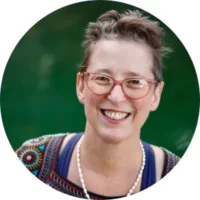
Beth Barany teaches science fiction and fantasy novelists how to write, edit, and publish their books as a coach, teacher, consultant, and developmental editor. She’s an award-winning fantasy and science fiction novelist and runs the podcast, “How To Write The Future.”
Learn more about Beth Barany at these sites:
Author site / Coaching site / School of Fiction / Writer’s Fun Zone blog
CONNECT
Contact Beth: https://writersfunzone.com/blog/podcast/#tve-jump-185b4422580
Email: beth@bethbarany.com
LinkedIn:https://www.linkedin.com/in/bethbarany/
IG: https://www.instagram.com/bethbarany/
TT: https://www.tiktok.com/@bethbarany/
FB: https://www.facebook.com/bethbarany
X: https://twitter.com/BethBarany
CREDITS
- EDITED WITH DESCRIPT: https://www.descript.com?lmref=_w1WCA (Refer-a-Friend link)
- MUSIC CREDITS : Music from Uppbeat (free for Creators!): https://uppbeat.io/t/soundroll/fuzz-buzz License code: UMMKDRL02DFGKJ0L. “Fuzz buzz” by Soundroll. Commercial license: https://musicvine.com/track/soundroll/fuzz-buzz.
- DISTRIBUTED BY BUZZSPROUT: https://www.buzzsprout.com/?referrer_id=1994465 (Refer-a-Friend link)
- SHOW PRODUCTION BY Beth Barany
- SHOW CO-PRODUCTION + NOTES by Kerry-Ann McDade
c 2026 BETH BARANY
For more “How To Write the Future” episodes, go here.
If you’d like to invite Beth onto your podcast, drop her a note here.