Lift a Sagging Middle with “What If?” by Kay Keppler
Most writers, sooner or later, will hit the problem of the Sagging Middle. The story pacing slows—the plot might even bore you a little bit now—and you don’t know what to do about it.
You’ve finished your book. After all the hard work, you need a great title. But writing a title is a lot different from writing a full-length novel or even a short story. Writing a title takes creativity, but it isn’t storytelling—it’s marketing. Your potential readers see a title before they see anything in chapter one, and it has to hook them. Companies spend fortunes on finding the right name for new products—names that will resonate with consumers—and so should you.
You managed to find your way through the battlefield of plot, claw your way free of character motivation, and rejoiced as you conquered the unsurmountable ending of happiness. Behold the miracle, you have emerged triumphant with a COMPLETE BOOK.
Every format of story telling—written, sung, painted, sculpted, photographed, inked, digitally enhanced—shares a sprinkle of an illusive elixir, a potion which will enable the viewer or reader to step into the magical world crafted from the artist’s mind. It is combination of words, note arrangement, brush strokes, use of lines, lighting, or shading that snag the listener’s imagination and set their hooks in so deep they believe, for a heartbeat or a collection of moments, that the artist’s fantastical world is real.
The goal for every writer has to be writing a book so compelling that readers can’t put it down. Using foreshadowing can help you create that kind of suspense, because it hints at what comes later and motivates the reader to find out what that drama or secret is. Foreshadowing can also convey information that helps readers understand future events.
Anthologies are often the first place a brand newbie writer can get published. Which is why many colleges and writing clubs collect and print anthologies. Inclusion in an anthology increases the value of group membership and lifts all boats – or in this case, author’s street cred.
With the upcoming conference and contest session upon us, writers may be scrambling to craft that perfect one-liner that captures the 300 plus pages of perfection to lob to an editor or agent. There may be some who are quietly being fitted for white jackets with buckles as they pare down their beautiful creature into 1 to 5 page synopsis to accompany that one-line pitch. If you’re hoping for words of wisdom on these two items, sorry, I’ll leave that to someone else better suited and not currently tearing their hair out trying to accomplish the same thing.
Many writers, when they sit down to work, look with anxiety or stress at that blank page. Or they’re afraid to send their work out—to editors or publishers—or even for critique. Others are afraid they won’t sell. Or if they have sold, that they won’t sell again.
I recently had the opportunity to do a beta read on a novel and provide a critique. The experience was both sad and depressing. Everything was off—pacing, character development, and conflict. Keeping all those ponies in harness pulling their weight and working together is complicated. But this is your job as a novelist.
I was out hiking with my wife yesterday on Thanksgiving and everyone was extra nice. I saw families spending time together. It looked like people were actually enjoying themselves.
Your book is finished. You’ve written a first draft, and maybe you’ve revised it—maybe even several times. You wonder if it’s “finished.” It might be. You might have a perfect gem on your hands. However, you might want to take another look—a slow, careful look—after you’ve let it rest for a week or two.
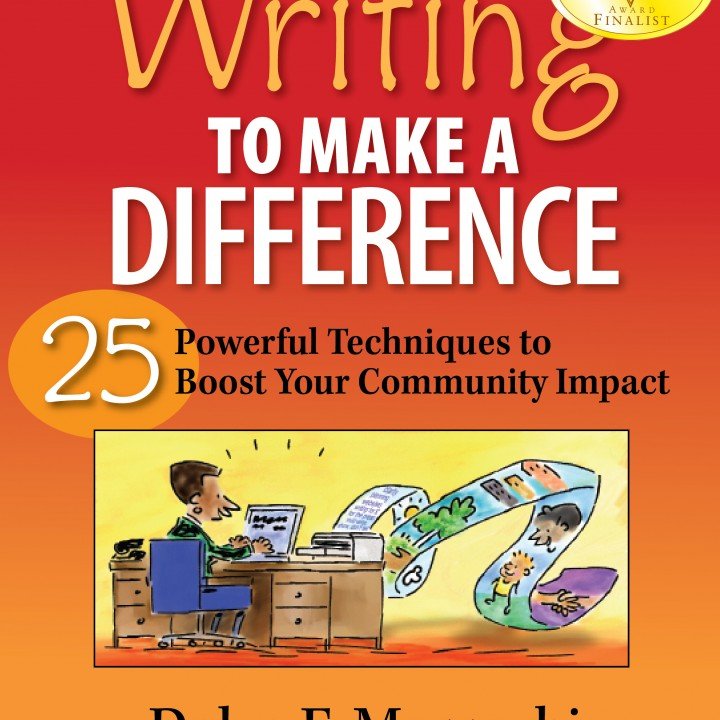
Welcome to today’s guest, Dalya Massachi, author of Writing to Make a Difference. Dayla has a passion for working with nonprofits, helping them raise money and get the word out about their causes. She specializes in helping social change professionals advance their missions through outstanding marketing and other written materials.
If we readers love your characters, then we’ll go with them just about anywhere. Last week I talked about sharing the telling detail about a character through nouns and verbs. As writers, it’s our...
Talent? Mojo? The secret awesome kick ass plot? Money? Connections? Okay. All those things help. But what we really need to succeed in this business of being an author and making money at it,...
Subscribe here to get notified each time we publish a post.
Welcome to the Writer’s Fun Zone, a blog for creative writers by Beth Barany, fiction writing teacher and novelist.
Articles by creative writers like you.
Check out the How To Write The Future podcast.
Subscribe to Writer's Fun Zone blog for resources, inspiration, and free resources:
Get these goodies:BONUS
As a bonus, you will also be subscribed to the CreativitySparks (tm) newsletter, full of tips and tools for novelists building a successful career. (Sent 1-2 times per week) By Beth Barany, Editor and Publisher of the Writer's Fun Zone, and a Creativity Coaching for Writers, and a novelist herself.Beth Barany helps authors get their books completed and out into the world, into the hands of their readers.

Creativity Coach for Writers, NLP Master Practitioner, and Master Teacher, Beth Barany has been there and knows how hard it can be to take your idea and turn it into a real book, that people will actually be interested, and even yearning, to read.
She walks the talk, as her clients like to say. She is the author of the 2012 award-winning young adult fantasy novel Henrietta The Dragon Slayer, as well as the author of the bestselling nonfiction books for authors and aspiring authors.
Ready to finish your book but not sure how?
Hire Beth to help you or take a class at Barany School of Fiction. Or join her Group Coaching Program.
Still have questions? Email Beth.
Recent Comments