Wasting Time by Catharine Bramkamp
 Let’s welcome back monthly columnist Catharine Bramkamp as she shares with us “Wasting Time.” Enjoy!
***
The Fear of Wasting Time
How many years have we spent not, under any circumstances, wasting time?
I spent two decades panicked about wasting time.
There were too many things to do: the work, the relationships, the dinners, the laundry, the homework, the forced family fun.
In the throes of our thirties and forties, there was never enough time.
And if we did take time to create, to relax, to even rest, we called it stealing time as if napping was a felony.
Call us criminals.
When the Body Forces Us to Slow Down
Sometimes our push to be efficient and get it all done triggers a health issue that forces us to rest.
We are familiar with that phenomena, where our bodies express what our conscious minds deny.
Too much stress?
We have an accident, we catch cold, our bodies somehow manage to slow us down.
Do you always get sick in January — called flu season?
It’s the only response to the holidays our bodies can express.
The Myth of Self-Care
I also love the directive to “Carve out time for you.”
Or “Take time for self- care.”
If people weren’t overworked and underpaid in the first place, maybe the bubble bath wouldn’t be necessary.
Plus the idea that we can solve the systemic problems in our culture with bath salts is insulting.
Art Looks Like Wasted Time
Enter your art practice.
Art absolutely looks like a waste of time.
To make art, we must slow down to a human pace.
For two centuries we’ve worked at an increasingly faster rate but our ancient nervous systems haven’t kept up.
With the Industrial Revolution, with computers, with wonderfully fast cars, we’ve picked up speed believing that moving fast and breaking things is the way forward.
But breaking things may still be a bad idea and the only thing I really need to move fast is an ambulance.
So let’s re-think the need for speed at the grocery store.
Or in our garden.
Or with our art.
Slowing Down Is Part of the Creative Process
Don’t keep pulling up the tomato plants to examine the root system.
Allow that starting at a blank page or just figuring out how to hold a new instrument is part of the thinking.
Art is not fast, despite stop action films on Instagram.
No one does anything in under 15 seconds.
We don’t even do much in 15 minutes.
Give yourself 15 hours, then measure your progress.
One of the many benefits of making art is it demands we slow.
That’s how we get into our flow.
We must take time.
Even that phrase Take Your Time, resonates.
Take it.
Okay, steal it.
Take Your Time — Or Steal It
Think of time as the pile of fries on your partner’s plate.
You ordered the salad, but you wanted the fries.
And each fry you steal from their plate tastes better because they are an undeserved gift.
Time is the same.
Time tastes better when it was meant for something else.
The Gift of Unexpected Time
Remember how delicious a snow day was?
A sudden break in the schedule, all our appointments and obligations suddenly rendered impossible.
A whole day of — nothing.
Or the pretend disappointment over a cancelled meeting?
A free hour!
But you wasted it didn’t you?
Instead of walking in the park, you caught up on email.
Instead, what if that gift of time was spent on your art?
What If You Chose Art Instead?
Once you get into the swing of stolen time, a surprising (or dangerous) idea emerges.
What if you didn’t have to steal the time from a cancelled meeting?
What if you quit the group that holds meetings and do your art instead?
What if you replaced that committee time with art studio time?
Oh man, that is crazy talk.
Still . . .
Learn More
Look for my new book — Take Up Space — Art is Your Second Act.
***
Want to read more articles like this one Writer’s Fun Zone? Subscribe here.
***
ABOUT THE AUTHOR
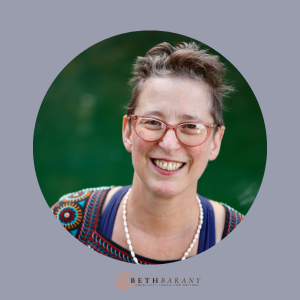
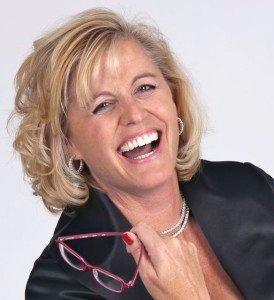 Catharine Bramkamp is a successful writing coach, Chief Storytelling Officer, former co-producer of Newbie Writers Podcast, and author of a dozen books including the Real Estate Diva Mysteries series, and The Future Girls series. She holds two degrees in English and is an adjunct university professor. After fracturing her wrist, she has figured out there is very little she is able to do with one hand tied behind her back. She delights in inspiring her readers.